Crewhouse began in Nicosia with three internationally recognised cameramen, a shared workspace, and a simple idea: that collaboration would be stronger than competition.
From its first home in an old stone house beside the dividing line, Crewhouse grew into a production company with a global outlook. Over the years our crews have worked with international broadcasters, UN agencies, NGOs, documentary producers, environmental organisations and cultural institutions, covering major news events and telling stories from Cyprus to the Arctic, Afghanistan, Africa, the Middle East and beyond. What follows are some of the highlights that marked how Crewhouse grew and developed over the years. We are proud of our work, and of the
legacy still being written. Crewhouse was built as much on its freelancers as on its founders. Some passed through and used it as a stepping stone, some were already established and collaborated, and some stayed with us throughout. The names are too many to list, and it would be dangerous to try, because one always forgets someone, and it would not be fair to leave anyone out. So to all of them we simply say thank you, for being an integral part of our story.

Crewhouse Media: 2006 – 2026
OUR HISTORY
OUR STORY
What happens if you take three internationally recognised cameramen, all with entirely different personalities, and put them in the same room? Looking back, it reads like the opening of a good joke. And, looking back, there has been a lot of laughter, and no small amount of excitement.
Shane McDonald, an Australian cameraman, is the only person we know who once did a bungee jump without the bungee. Send him anywhere in the world with a camera and he came back with amazing stories. Then there was Chris Lewis, another Australian, whose mastery behind a camera was matched only by his mastery in the kitchen. And then David Hands, a British-Cypriot, who never imagined doing anything but being behind a camera. He had come home to Cyprus after spending twelve years covering conflicts in Yugoslavia, Rwanda, Zaire, Iraq and elsewhere. His story mirrored Shane's and Chris's, because they had all covered the same wars.
They first met in the former Yugoslavia in the 1990s. Back then they all lived in Cyprus, which had become a hub for international broadcasters, especially after the first Iraq War. Two facility houses supplied crews: Chris and Shane worked for Newsforce, David for Vanguard. In 1994 David left to open a Vanguard office in Nairobi. As the news industry drifted away from the island, Chris moved to Germany for Reuters and Shane to the UK for the BBC. Newsforce was sold to GlobeCast in 1998 ending an era of foreign crews in Cyprus.
Then fate intervened. All three decided to move back to Cyprus at the same time just after the island entered the European Union, still raw from the collapse of the Annan Plan referendum that spring. So, what now? They met at New Division, a local pub, to ask one simple question: compete and drive prices down, or join forces and complement each other? The answer was obvious. Shane had already found the place, a large old stone house overlooking the buffer zone. Perfect. And so an unofficial partnership began, each helping the other while keeping their independence.
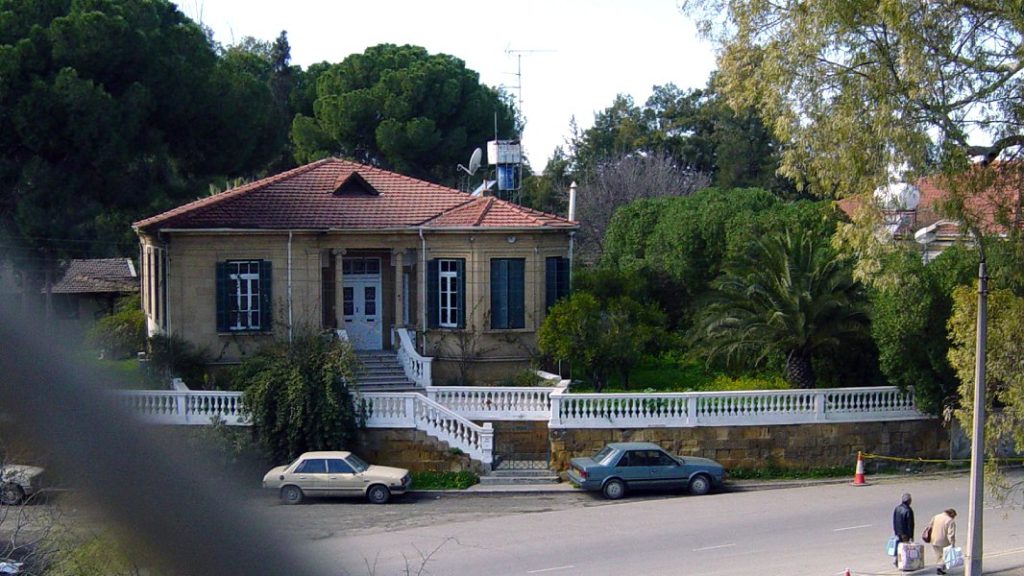
The large old stone house overlooking the buffer zone
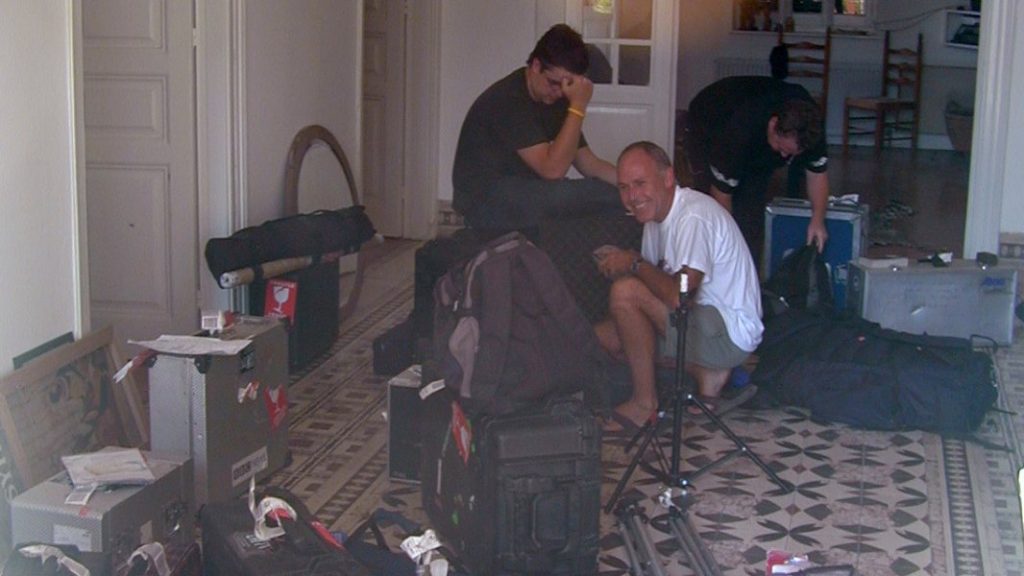
Who needs furniture when we have flight cases?
2007 began in the best possible way. We signed an agreement with the European Journalism Centre to deliver journalism training programmes in Nicosia, Cairo and Ankara for journalists from across the MENA region. This was managed by the Thomson Foundation, under David Quin, the start of a long, productive and genuinely enjoyable relationship.
Our crews kept moving. We covered Lebanon, Syria and Israel for the BBC, followed Greenpeace to Italy and Malta, and travelled to Syria and Yemen for UNDP New York on stories about women's empowerment and sustainable development. This was our first real contact with the United Nations, and it led us to bid for a UNDP documentary to be shot in Cyprus on the role of organic farming in the peace process. We won the bid, and next year we would begin filming Together with Nature.
Closer to home, something remarkable was stirring. Ledra Street, the main pedestrian artery of old Nicosia, had for decades been sealed by a wall dividing the two sides, and now, at last, there was talk of it coming down. It was a small stretch of pavement carrying an enormous weight of history. This story and the German Navy still with us, kept our crews busy with the usual suspects, ARD and Associated Press, while we picked up some new ones along the way: TV2 Norway, Swiss TV and ITN. We also provided crews for a PBS documentary filmed on the island. Further afield, work with HWLL took a crew to Dahab, in Egypt, for a diving documentary.
And outside the office we spotted a black and white cat was hit by a car. After some time at the vet, we gave him a new home, named him Hip-Hop and he became a permanent member.
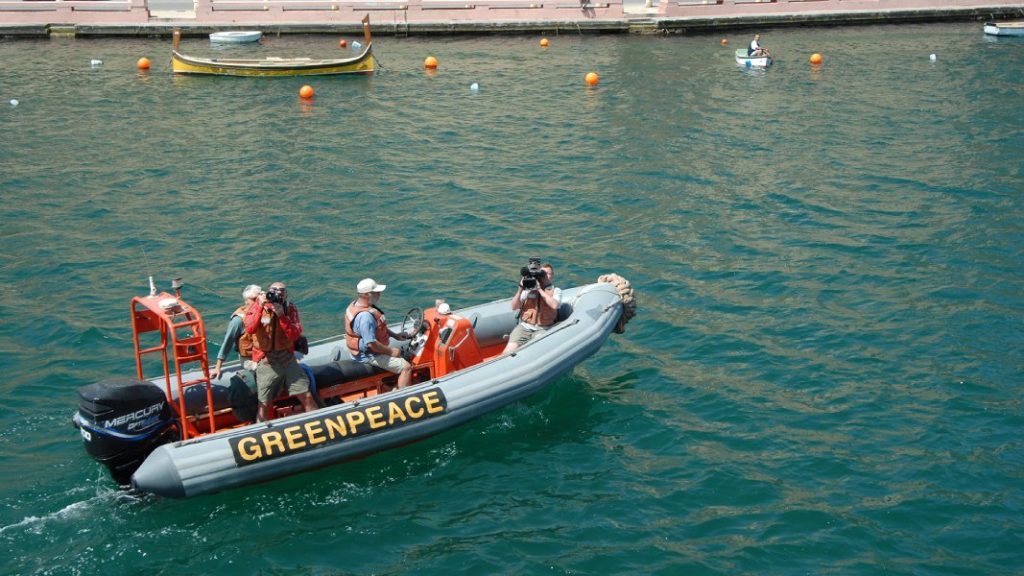
Chris filming with Greenpeace
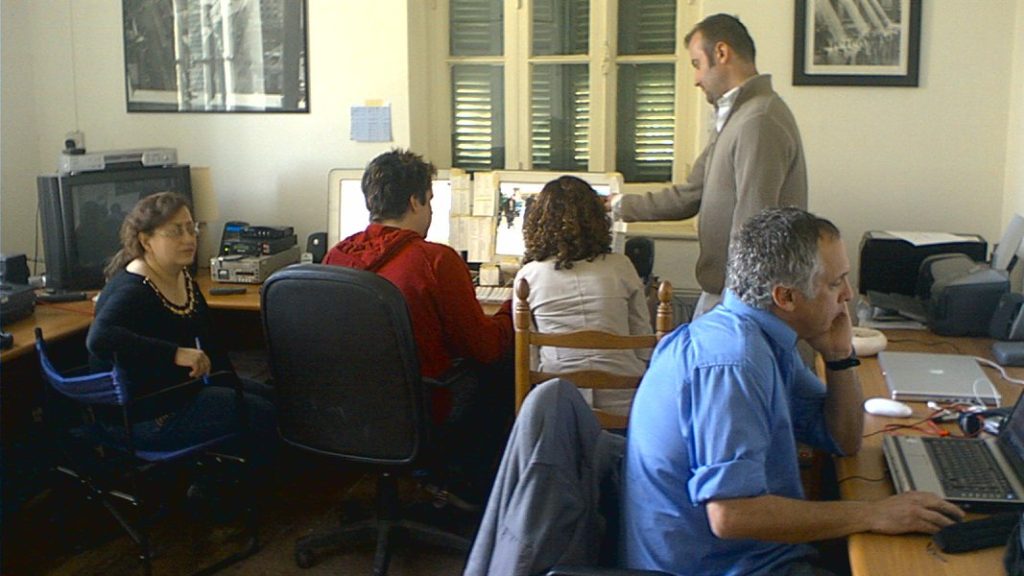
Our office is turned into a training ground for Thomson
It worked, and it worked well. Trust was built, and so it was decided to make it official: register a limited company in which all three would be equal partners. On the first of August, Crewhouse Media Ltd was born. Coming up with a company name is never easy, but in our case it was obvious. There was a beautiful house, and it had crews in it, hence, Crewhouse.
The partners were soon joined by producer Sabine, editor Simon, our office managers, and our in-house freelance designer Matt, who gave us our first visual identity. Shane brought his Betacam SX kits, Chris his DVCam, and David his ageing Betacam SP alongside the newly arrived format, HDV. They also brought lights, mics, edit suites with Avid and Premiere, and their contact books: the BBC, RTL, Reuters, N24, EBU and HWLL and others they worked with before.
The wider world made sure our first year was anything but quiet. In the summer of 2006 war broke out in Lebanon, and our very first official jobs sent crews to Beirut for over a month, filming and editing for the BBC and N24. We were accustomed to this so the transition from being freelance to being a company was a smooth one. Those who stayed in Cyprus were no less busy. We produced our first independent documentary, Reflections from the Outside, directed and filmed by Chris while he was still in Germany and distributed by Journeyman Pictures.
We provided production services for the Emmy-winning Discovery Channel film Iran: The Most Dangerous Nation, produced by our friend Borna, we travelled to Cairo for Inside the Great Pyramid for HWLL under the expert direction of Elena Konstantinou, and we sent a crew to work aboard Greenpeace's Rainbow Warrior. We also sent crews to Turkey to cover the Pope's visit for the European Broadcasting Union. Back home, the German Navy set up base, and Constantinos Nikiforou and Nick Hadjipavlou began a long collaboration with us, both working on stories for Germany's ARD and for APTN.
And we found time for a second short film, The Heritage of Kontea, narrated by the BBC's Gerald Butt and Jill McDonald, made to accompany a proposal to raise half a million euros for restoration projects in the village of Kontea. And Crewhouse had some new four legged additions. Boddy and Buddy, a duo of dogs that we would babysit for few years to come joined Natasha, the cat the came with the house.
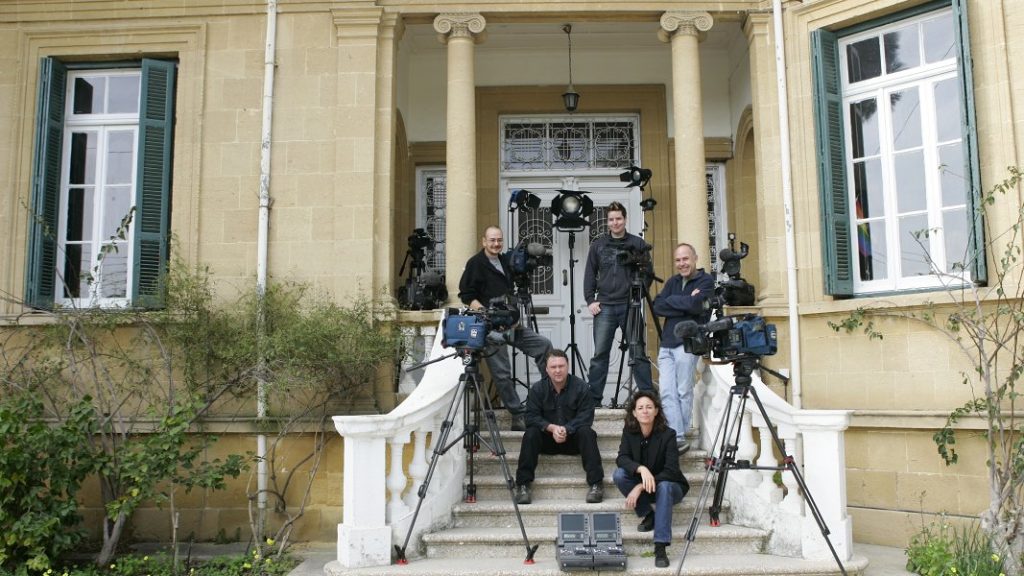
The first team (L-R): David Hands, Simon Hustings, Shane McDonald, Chris Lewis, Sabine Neubert
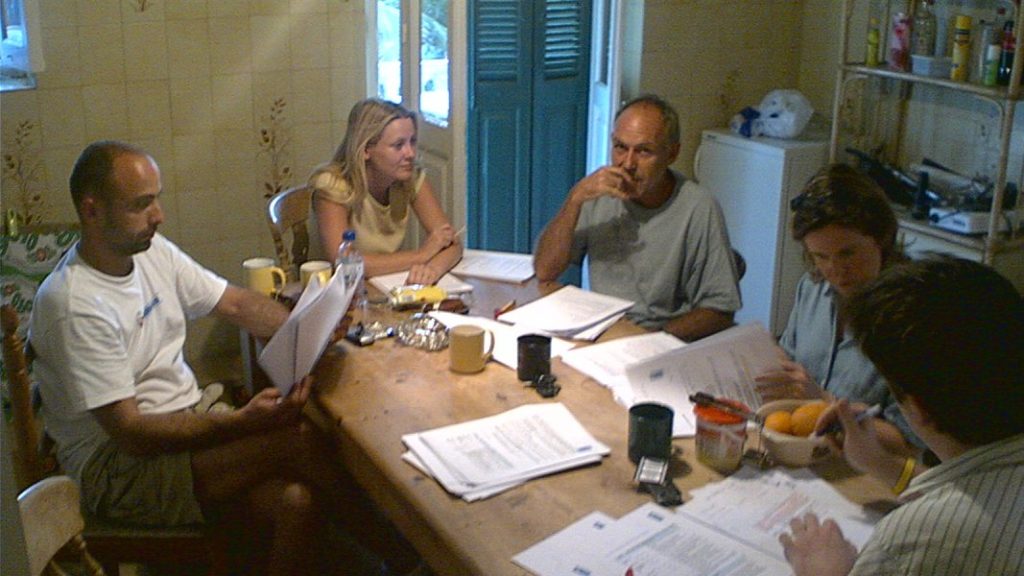
Working on our first proposal (L-R): Constantinos, Victoria, Shane, Tabitha and Simon
In 2008 we pushed our documentary and international work further still. The Heritage of Kontea had played it role and helped raise the money for restoration, so we began developing a feature-length film, Kontea Esti, to document not only the rebuilding of the village but, more importantly, the cooperation between its Greek Cypriot and Turkish Cypriot communities.
That spirit of cooperation ran through the year. With the Thomson Foundation, the relationship we had begun the year before, we launched the "Peer Journalist Program" in Cyprus. The project paired young Greek Cypriot and Turkish Cypriot journalists, side by side, to foster peace-building, cross-community reconciliation and professional media development.
It was a fitting subject for the year. In February Cyprus elected Demetris Christofias president, a result that reopened hopes for reunification talks. In April the Ledra Street crossing finally opened, and the world's media descended on Nicosia. We worked for our established news clients and added new ones, most notably YLE and ZDF. The renewed optimism even drew the Elders to the island, with Desmond Tutu, Lakhdar Brahimi and Jimmy Carter arriving to share their experience. That summer Cyprus was gripped by its worst drought in memory, with water shipped in by tanker. We told that story ourselves in Cyprus Drought: Is Cyprus Running Out of Water?, exploring how the absence of rain had turned water into something rare and precious for ordinary families, distributed by Journeyman Pictures.
Internationally, we sent crews to Kenya for RTL; to Jerusalem, Geneva and Athens for the BBC; to the Sinai for another diving film; and across Israel, Belgium, the Netherlands, Denmark, Spain and Italy for Greenpeace. We also provided live crews for the EBU in the UAE during the Bush and Sarkozy visits, and covered the Pakistan elections.
And then, because we also need a laugh, comedian Jim Davidson performed a stand-up for the troops on the British bases, filmed on five cameras for a DVD release on Amazon.
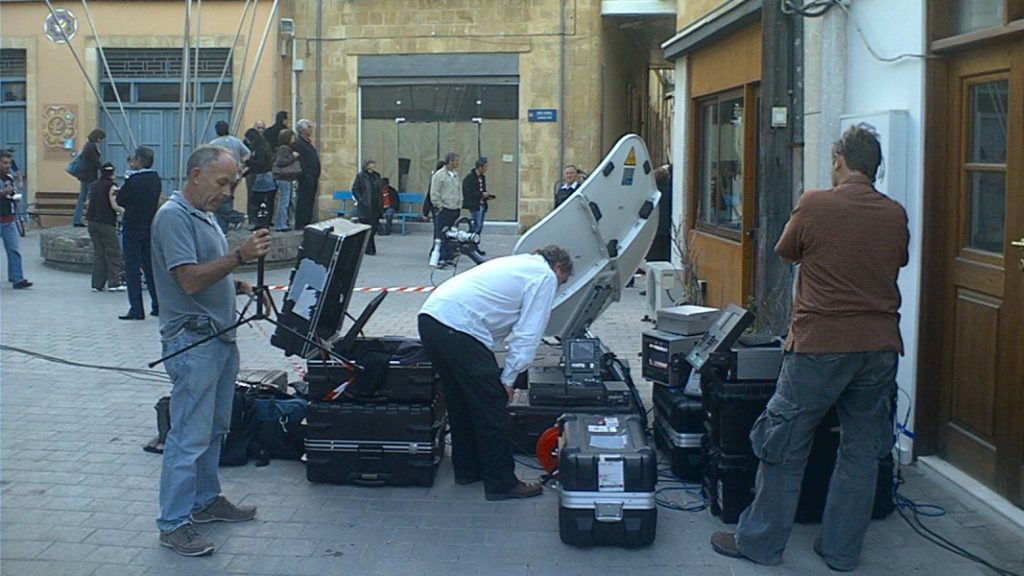
Ledra street opens and we are live to the world
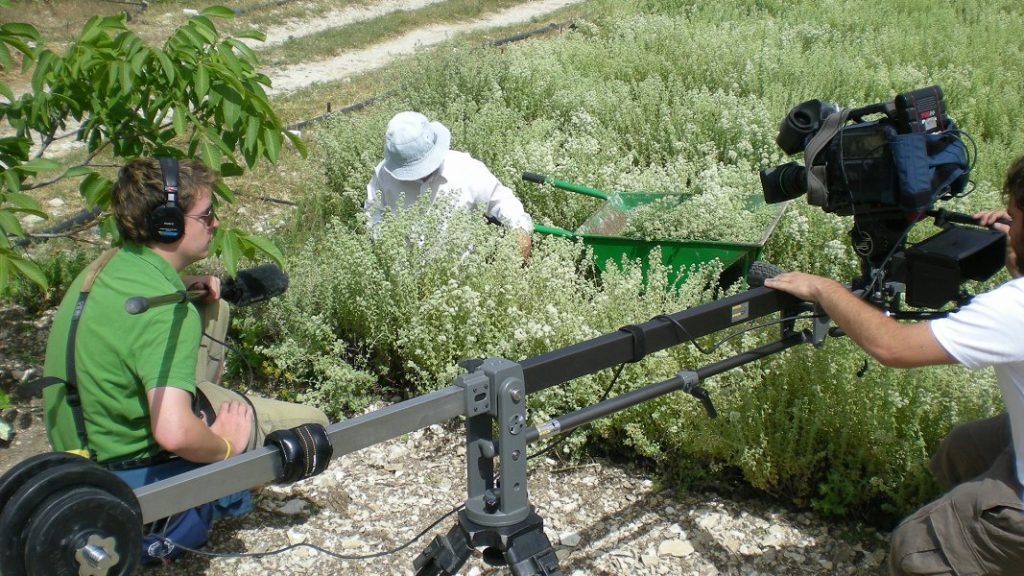
Filming organic farmers
In 2009 we set out to strengthen our international profile, and the Afghan presidential elections gave us the push. We opened an office in Kabul to support the EBU's facilities there, an important step in proving we could serve major news operations well beyond Cyprus. From home, we continued supporting the EBU in Dubai, in London for the G20 Summit, in Cameroon and Bethlehem for the Pope, and in Cairo for President Obama's landmark address to the Muslim world. It was a year when the new American president and a world still reeling from financial crisis dominated every bulletin, and we were there for a good deal of it.
We returned to the Sinai with HWLL for a thirty-minute documentary, Testing New Waters, about Global Underwater Explorers, a project that carried us on to Tunisia, Sweden and Israel for additional filming. Our work with Greenpeace continued too, with crews in the Arctic, Poland, Denmark and Malta documenting the effects of climate change.
In Cyprus we began producing Video News Releases, the first covering the Cyprus Women's Cup for the Cyprus Tourism Organisation. More significant still, we signed a three-year Long-Term Agreement with UNDP-ACT to provide film support for its mission in Cyprus. One of the year's true highlights though was a single interview: an in-depth conversation with the legend journalist Alex Efthyvoulou for the Associated Press archive. We were proud and honoured to help record his legacy.
The year also brought a quiet revolution. Technology has always steered our industry, and the arrival of the Canon 5D changed everything for us. We realised that the broadcast cameras we had leaned on so heavily were about to begin their decline. The large sensor of the 5D delivered a cinematic look that broadcast kit could not match.
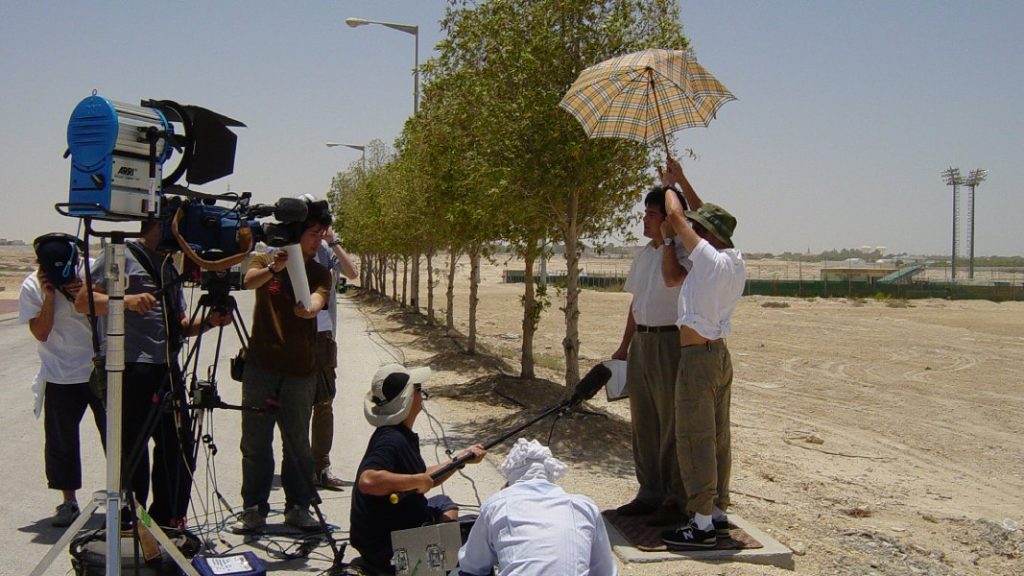
Going live from the Middle East
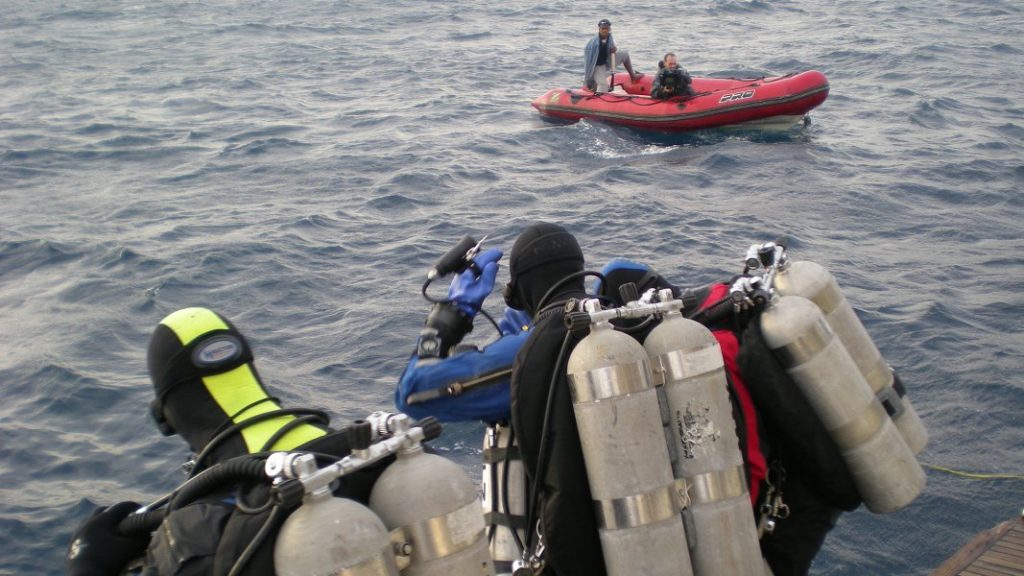
Filming divers
In 2010, Aleksandar "Sasha" Ljubojevic joined us first as an intern, as part of his university master's degree. Very soon after, he travelled to Kenya to film a documentary on humanitarian medical work, a project that later won him the Best Student Award at the 3rd Nicosia International Documentary Festival.
Something we had stumbled upon in Sweden the year before now bore fruit. The curiosity of Elena about the Runes prompted her to begin Runes: Letters of a Divine Script, a documentary that took us across Denmark, Sweden, Norway and Iceland to film some of the oldest artefacts of that region. It is an unbelievable experience to see and film up close these rare gems.
Crews also joined Greenpeace campaigns in Haiti and the Arctic, including work tied to the Bluefin tuna campaign. Our Kabul office covered the Iraq elections and began providing services for CNN in the region, while our Cyprus crews covered the UK general election and the visit of Pope Benedict XVI to Cyprus for the European Broadcasting Union.
Under our Long-Term Agreement with UNDP, we produced the documentaries Voices of Tomorrow and Hamam Awakening, along with some public service announcements for the Association of Historic Dialogue and Research. And we broadened our United Nations work further by producing the first film for the United Nations Peacekeeping Force in Cyprus (UNFICYP), a short documentary explaining the history and importance of its peacekeeping mission, directed by Shane.
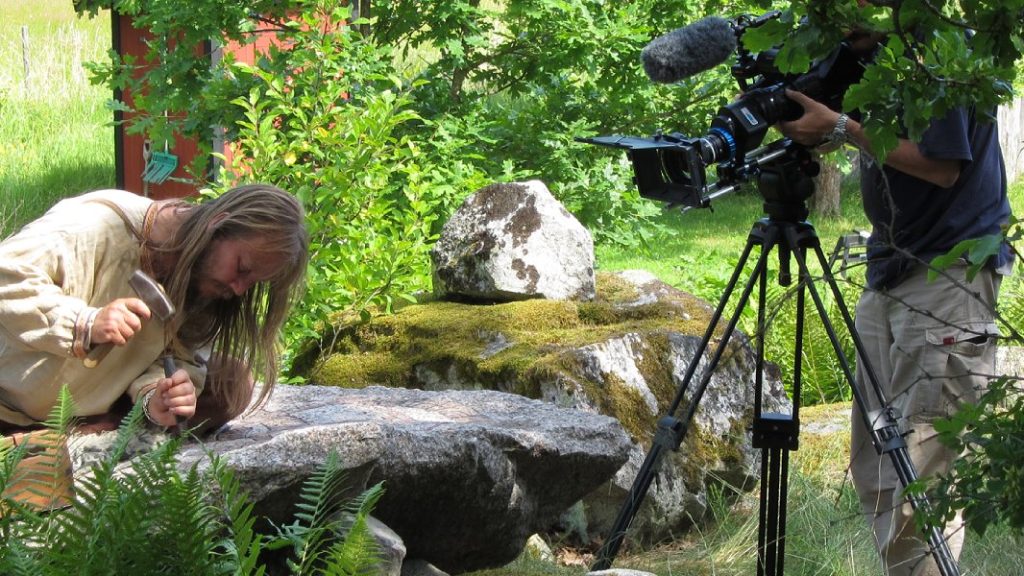
David filming Runes: Letters of a Divine Script
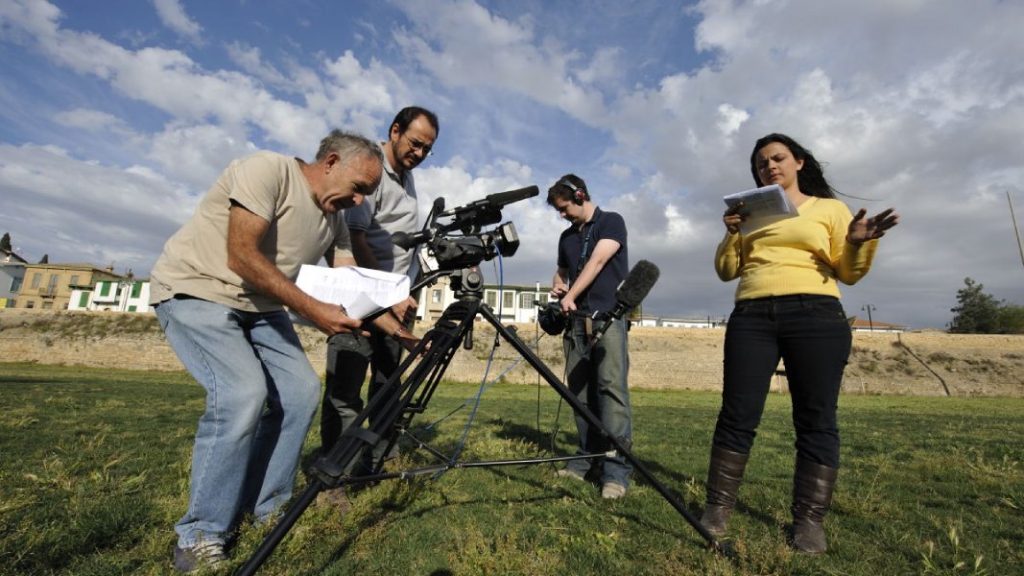
Shane directing Voices of Tomorrow
In July, tragedy hit home, as the Mari naval base explosion tore through the south coast, killing thirteen people and crippling the island's main power station. It was one of the worst man-made disasters in modern Cypriot history, and for weeks it was a major international news story that we found ourselves covering on our own doorstep.
Further afield, the region was ablaze. The Arab Spring had swept from Tunisia to Egypt and on to Libya, and our Kabul office proved its worth many times over, supporting the EBU and CNN not only in Afghanistan but in Iraq, Cairo and Libya. Chris travelled to the Solomon Islands for another HWLL underwater documentary, Return to the USS Atlanta: Defender of Guadalcanal, filming topside on a 5D. The film went on to win several festival awards, including the Spirit of the Independents award at the 2012 Fort Lauderdale International Film Festival, and was later licensed to Netflix.
Then came a genuinely intriguing brief. How do you turn a dry economic report on the benefits of a Cyprus solution into something people will watch? After much brainstorming, we set our film in the future, as a news bulletin: Nine News in 2030. Written and directed by Tabitha Morgan, it imagined a united Cyprus anchored by bilingual newscasters, with augmented reality and touchscreen studios built entirely in our own small edit room. As quoted in the Financial Mirror: “Is it a tragicomedy? A docu-drama or science fact?”
And The Elders came back, this time to take part in their documentary, Digging the Past in Search of the Future. Lakhdar Brahimi, Jimmy Carter and Desmond Tutu join four teenagers on the island (two Greek Cypriot and two Turkish Cypriot) to learn about efforts to locate and identify the remains of thousands of Greek Cypriots and Turkish Cypriots killed during violence and conflict in the 1960s and 1970s.
That autumn David took some time off from Crewhouse and moved to Cambridge for a master's degree, proof of exactly why the partnership we had formed seven years earlier mattered: no one was ever truly alone, and the others could carry the work while one of us pursued a path no lone freelancer could. Even so, David hardly disappeared into academia. He filmed part of Different Country, a character-driven series by director Shareen Anderson following disadvantaged South African students through a year at Stowe School in the UK, and continued editing Kontea Esti remotely, made possible only by the new Mac laptops and Final Cut Pro.
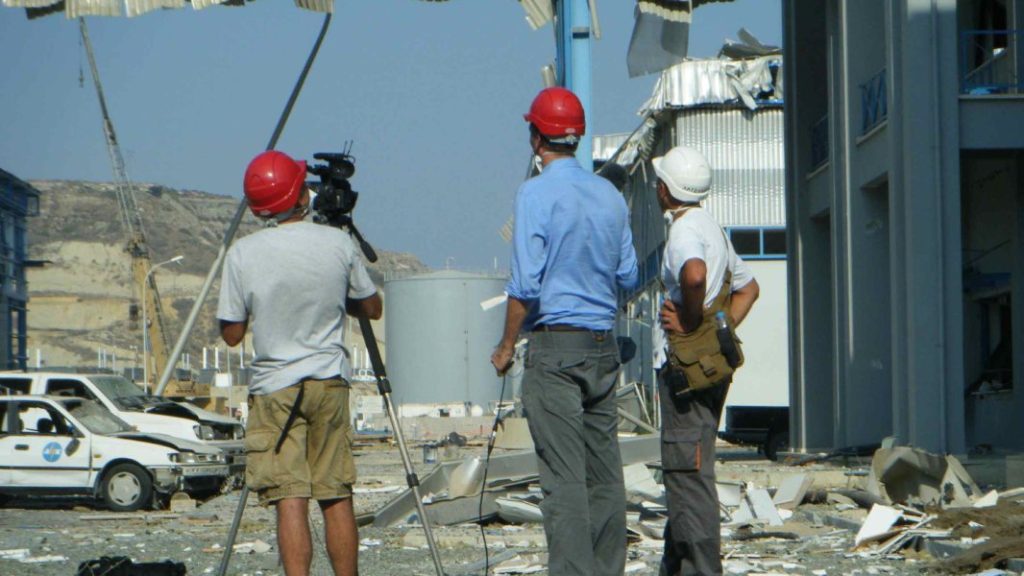
Shane filming at the Mari explosion
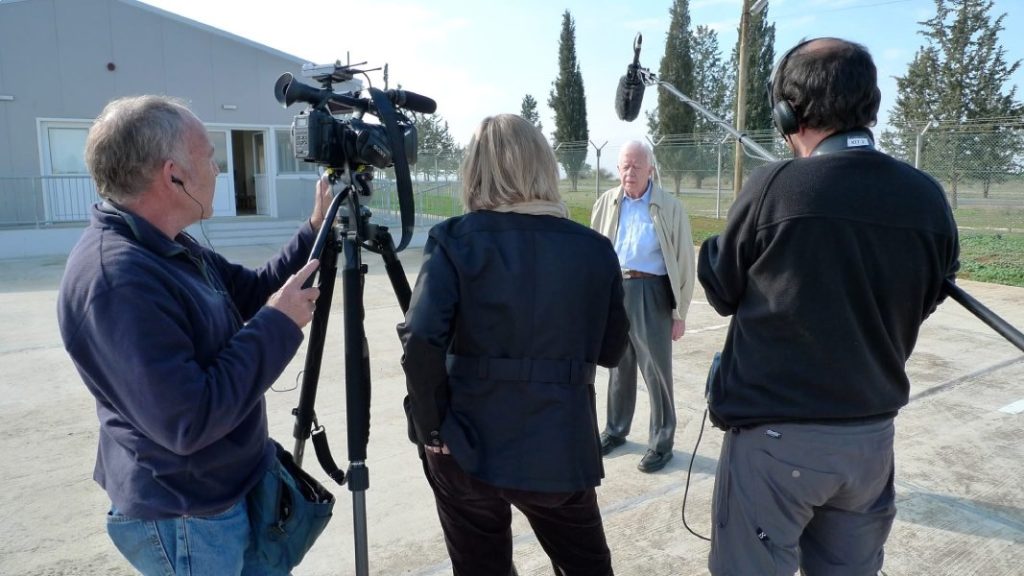
Interviewing President Jimmy Carter
It was also twenty years since the siege of Sarajevo began, and Shane returned to the city to pay tribute to the lives lost and to film a special for NTR, closing a circle that had opened for all three of us in the Balkans two decades before.
Closer to home there was rare sporting joy. APOEL became the first Cypriot club to reach the Champions League knockout stages, drawing enormous media interest as they hosted Lyon and Real Madrid. Yet even as the football brought good news, a darker story was brewing: the first tremors of an economic crisis. It summoned back the usual suspects, and some new ones: DW, ARTE, Bloomberg and CCTV. Against this backdrop we filmed the European Business Awards for the first time, the start of a collaboration that would run for years.
In the summer David was awarded a Master of Arts in Film and Television Production from Cambridge School of Art at Anglia Ruskin University. His dissertation drew directly on Crewhouse's work across the divide, titled "Challenges of Bi-communal Settings to the Bi-communal Film-making Process," and he returned to begin the Potamia Project. This was another rewarding piece of work, documenting one of the few villages where Greek Cypriots and Turkish Cypriots still live side by side. Here we did more than film: we wrote blogs and made high-quality portraits of the people themselves.
Our other challenge was covering the First Annual Inter-Regional Learning Exchange Conference, on citizen-led innovation and social change during periods of transition, with a focus on civil society across the Middle East and North Africa. Rather than record it plainly, we made it character-driven, choosing two of the hundreds of delegates, a young Egyptian woman and a young Bosnian man, and following them throughout. It let us be a little more creative, and it made the ideas human.
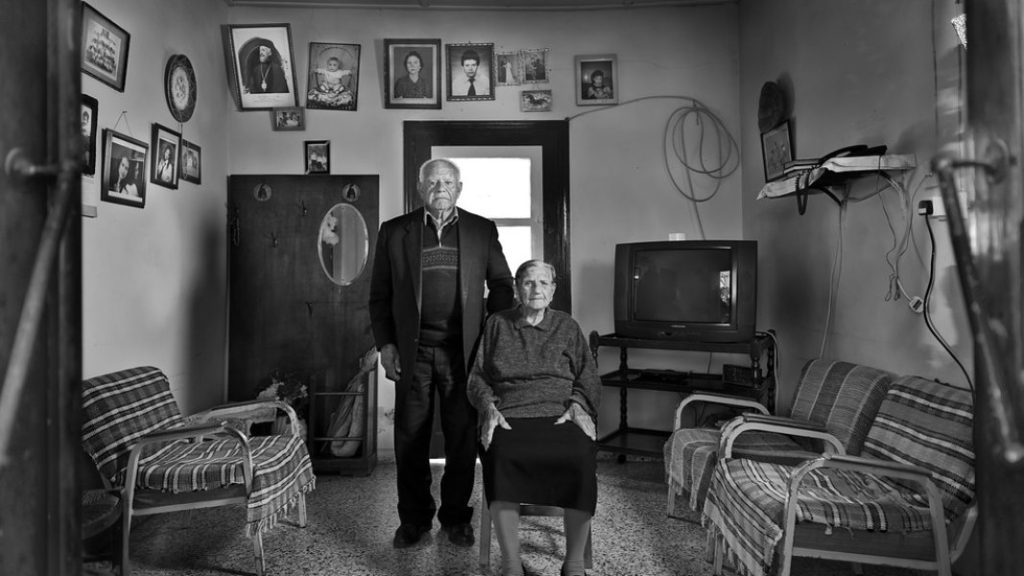
One of the photographic portraits of the Potamia project, taken by David
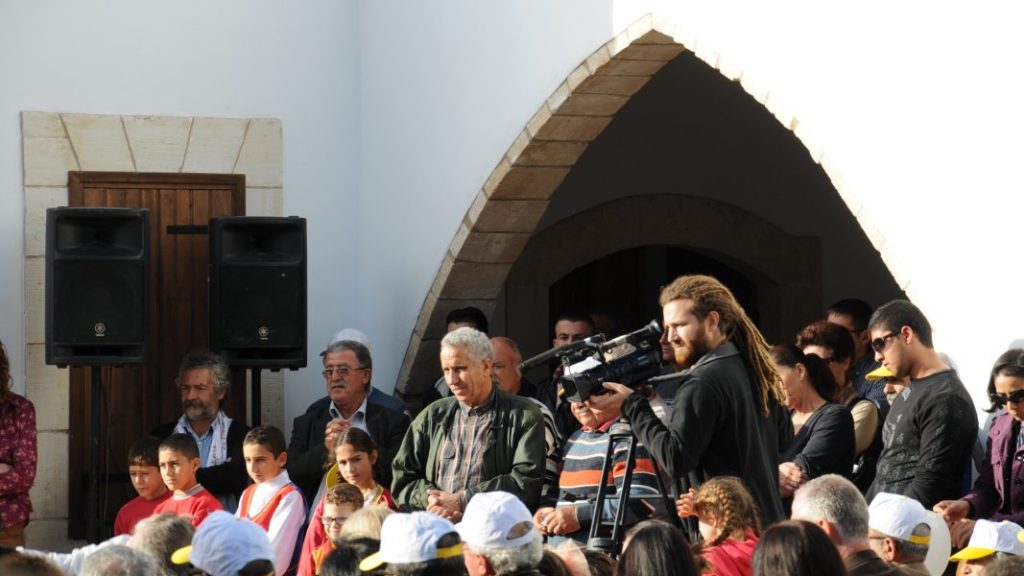
Sasha filming the last shots for the Kontea Esti documentary
The financial crisis finally broke, and it broke hard. In March the so-called "haircut" on bank deposits wiped out the life savings of thousands, banks closed their doors, and queues formed at cash machines across the island. Panic and fear took hold, and the story drew intense international attention to Cyprus.
We were in the thick of it. It was probably the only time in our history that we had so many crews working out of the office all at the same time as we provided crews, production services and footage for ARD, ARTE, RAI, NOS, ABC, Deutsche Welle, Al Jazeera, Bloomberg and ZDF, supporting coverage of one of the most significant economic moments in the country's recent history.
After the debate stirred by Nine News in 2030, and with the economy now dominating every conversation, we made a follow-up, this time in a more journalistic, documentary style: Cyprus: What If?We wanted to weigh the pitfalls honestly, so who better to ask than Nobel laureate economist Sir Christopher Pissarides and his counterpart Dr Mustafa Besim, who each shared their views. Because we were still looking to the future we did not use AR techniques and instead, we used the tilt-shift, or "miniature faking," effect on some shots, turning real-world scenes into what looked like tiny models, a deliberate break from realism.
Even in so difficult a business year, new doors opened. Tracc Films commissioned us to shoot our first corporate video, a piece for The Telegraph about 3CX, showing how businesses were using the 3CX phone system to improve communications while cutting telecoms costs. It was a small but telling sign that, whatever the headlines, work went on.
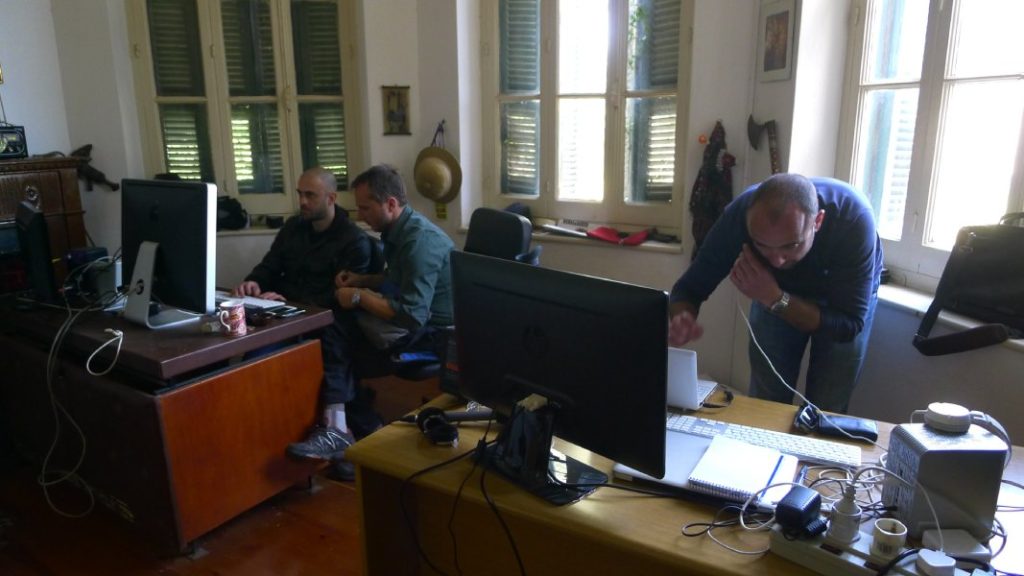
The office became a base for tens of crews during the economic crisis
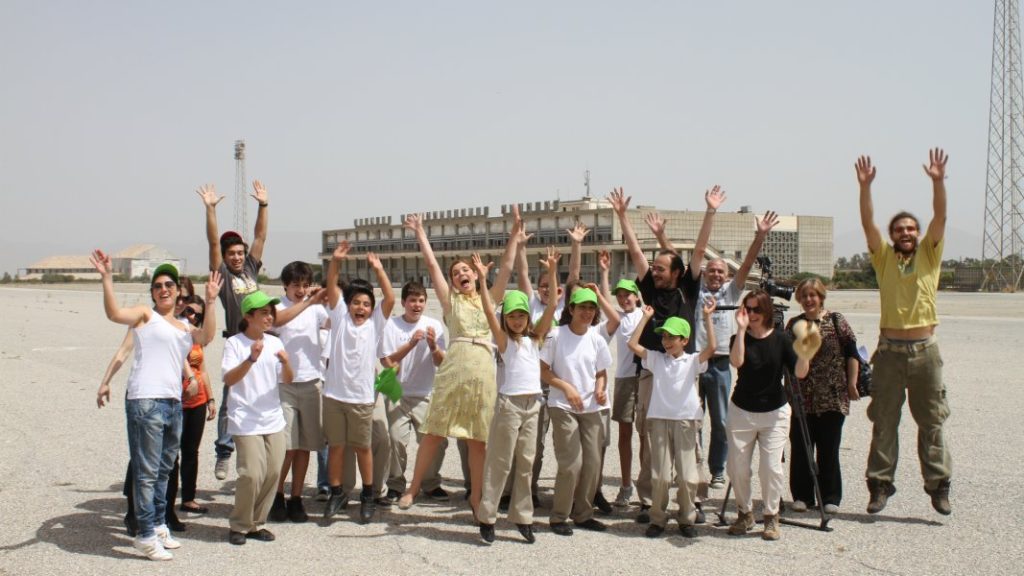
Filming at the abandoned Nicosia airpot for Nine News with school children being the main actors
The year began brilliantly with a cold month in Kyiv, working with a group of talented young journalists to help produce a documentary for international audiences. It was an eye-opening experience: we shared what we knew, and in return learned a great deal, both from the group themselves and about the displacement of Ukrainians and the war in the east. The result was Looks Like Home, following three displaced people trying to build a new life in Kyiv, far from their home.
Closer to home, we stayed with the human stories, touching on migration for UNHCR's Family Reunificationand on Gender Perspectivesfor UNFICYP to mark International Women's Day. There was hard news too, an EgyptAir hijacking that ended in Larnaca and a murder in Ayia Napa, reminders that the day's headlines can land anywhere. We also continued our work with international organisations, among them the EBRD and the OSCE.
That same year David became Artistic Director of the Cyprus Film Days Children and Youth Film Festival, an initiative of the Ministry of Education, a role he held until 2019, and one more sign of how our work was reaching beyond the crews and into the culture around us.
And on the wider Ukrainian scene, we continued providing training to Ukrainian journalists through the year. But the biggest mark of the year was that our beautiful stone building was sold and the new owners would renovate and use it as it was originally intended, a house without crews. So, we moved to a new place together with our cats, Hip-Hop and Oscar (a new addition), still to a stone-build house but, no matter what, it would never be as inspiring as, to what is now widely known as the “Original Crewhouse”.
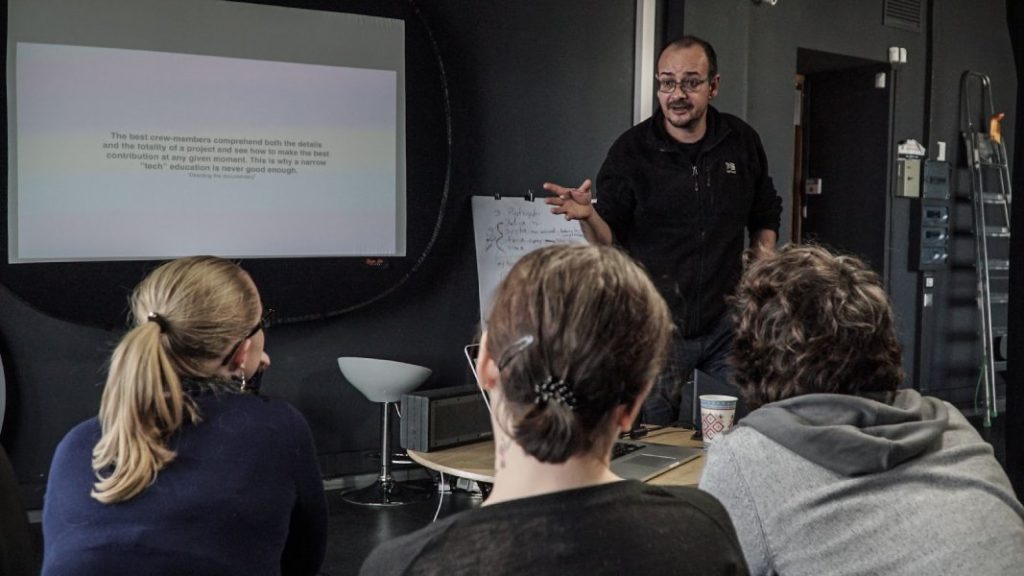
The Hromadske team in Ukraine
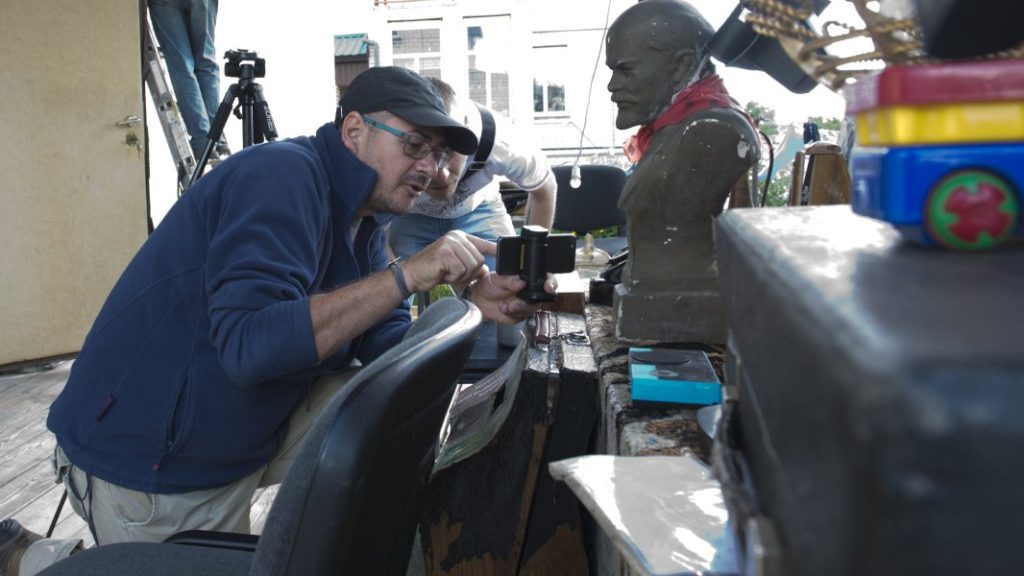
Working with Ukrainian journalists on the use of mobile phone filming
In 2014 we also entered a non-fiction direction and together with Blunatic Pictures we co-produced our first fiction short, Afterthoughts, which won Second Best Film at the International Film Festival of Cyprus. After years of filming what was out there, it was liberating to film a fictional world.
But documentary was and will always remain in our heart. We began documenting the work of Tasoula Hadjitofi and the Walk of Truth initiative, which works to recover looted cultural heritage and raise awareness of the trafficking of stolen artefacts, a cause that ran deep on an island that has lost so much of its own. We also signed a Long-Term Agreement with the European Bank for Reconstruction and Development, travelling to Albania to film the EBRD's support for the country's Deposit Insurance Agency. We shot on a Nikon D800, another technology-led choice, since the prime 1970’s Nikon lenses gave us a beautiful “rustic” image. That same kit but with newer lenses, went to work again when the US Embassy hired us to accompany Vice President Joe Biden during his visit to Cyprus.
Our relationship with Tracc brought further corporate work, a Wall Street Journal production about Medochemie, alongside that year's European Business Awards. We also filmed a documentary on the OPCW-UN joint mission to dismantle chemical weapons in the region, timely work in a year when that mission won the world's attention.
And, on the lighter side, Chris went to Sochi to support Olympic Broadcast Services at the Winter Olympics, and we filmed Tottenham Hotspur's Europa League fixture in Cyprus against Anorthosis. From heads of state to penalty boxes, it was a year that reminded us how wide our little company's reach had grown.
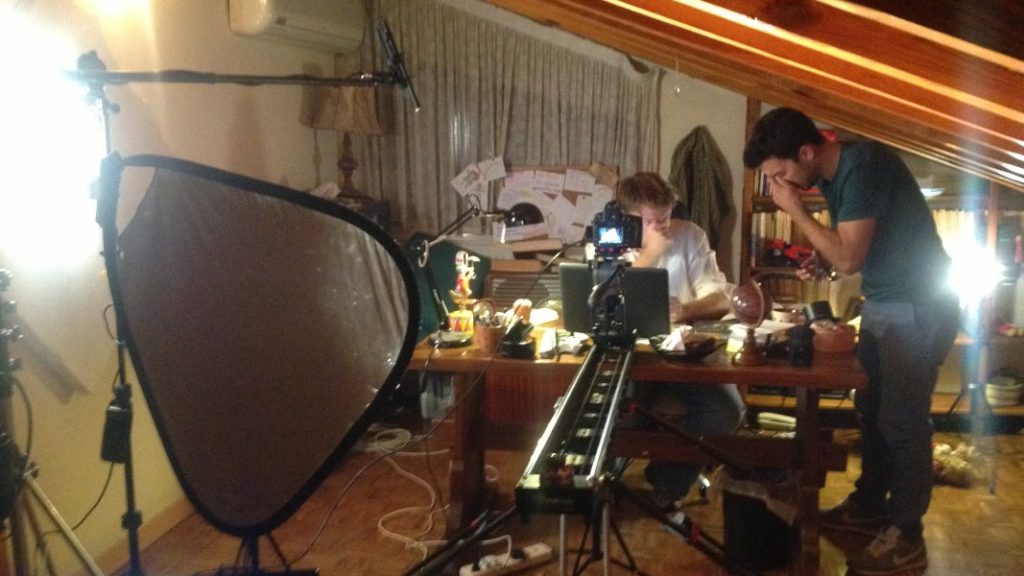
On the set of our first short fiction film, Afterthoughts
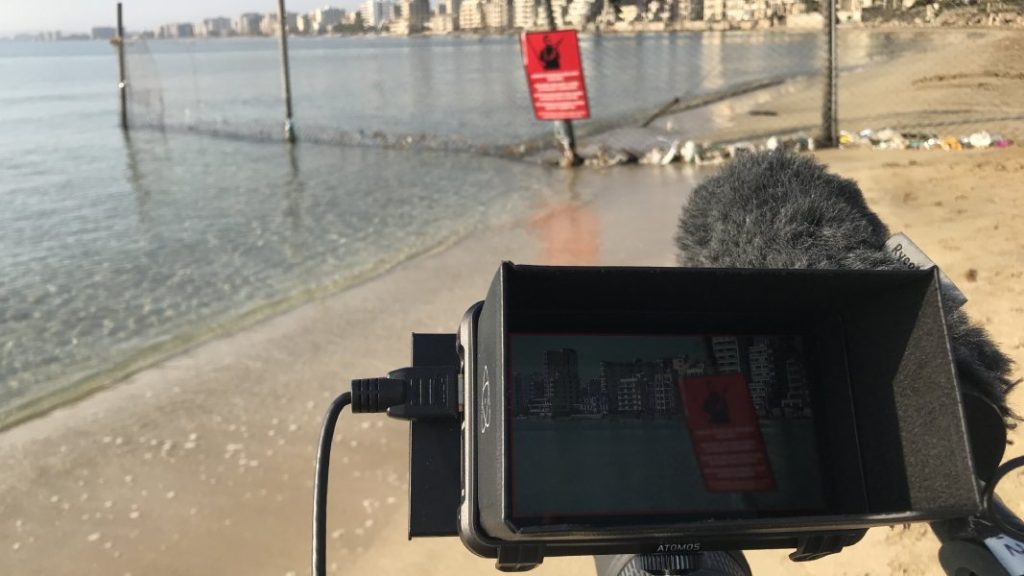
Filming for the Walk of Truth in the abandoned city of Varoshia
2015 was such a busy year that choosing a single highlight is almost impossible.
Was it the documentary shot on Ikaria for Business Insider? Ten days on a Greek island searching for the answer to why its people live so long, which became Ikaria: The Long Life Island, co-directed by David and Alana Cacoyiannis and distributed on Amazon and Apple TV. Or was it winning Best Film at the International Film Festival of Cyprus for our short fiction Out of Sight, co-produced once more with Blunatic after the fun we had making Afterthoughtsthe year before? Or perhaps it was finally completing the extended cut, Kontea Esti: Awakened, documenting the heritage restoration and cross-community cooperation in the village we had first filmed nearly a decade earlier?
It might equally have been the start of a new three-year collaboration with the Thomson Foundation to train journalists in Ukraine, the beginning of a long connection with the country and its people. The training also included producing content for social media and the use of mobile phone devices in journalism. As always, we tried to be at the forefront of technology and innovation.
We also produced Taste of Famagusta, a four-part mini-series directed by Sasha, that used culinary traditions to explore the identity of the greater Famagusta region, challenging older and younger generations across the island to share their recipes, stories and heritage. And we travelled to Malta for the Commonwealth Heads of Government Meeting for the European Broadcasting Union, and to Egypt to showcase the Women in Business programme funded by the EBRD.
Two firsts rounded off the year: our first training and consultancy work, for the in-house video department of Marcus Evans, and our first event highlights film, for the iFX Expo in Limassol. Corporate work, it turned out, could be creative work too.
But the year saw a sad development as our partner Chris decided to move back to his hometown in Australia. This was a big loss as he was such an important and integral part of Crewhouse’s development and reputation. But, we all know that all good things come to end and we continued to work together whenever possible as not only we were colleagues but strong friendships were cemented.
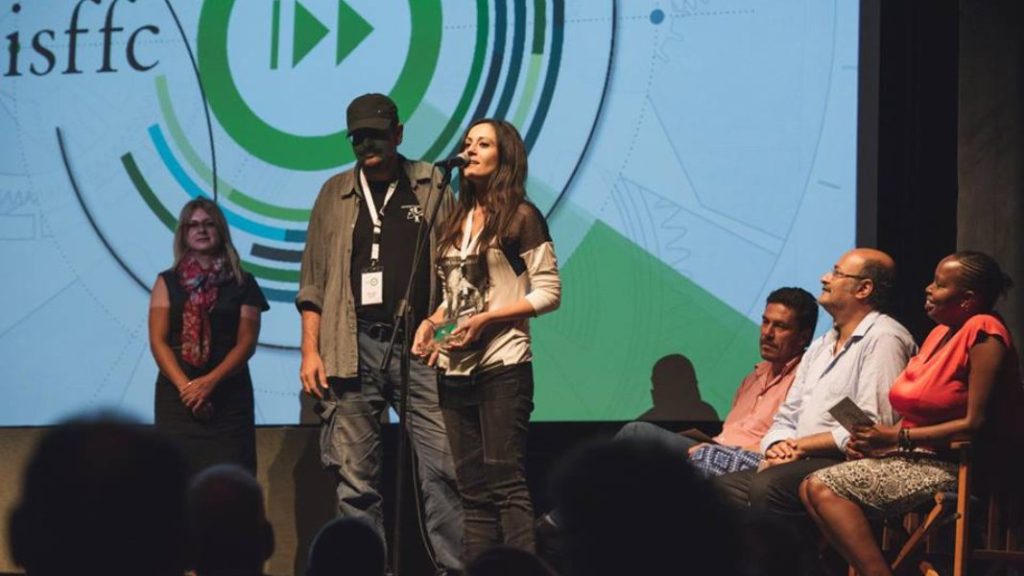
Christina and David collecting the award for “Out of Sight”
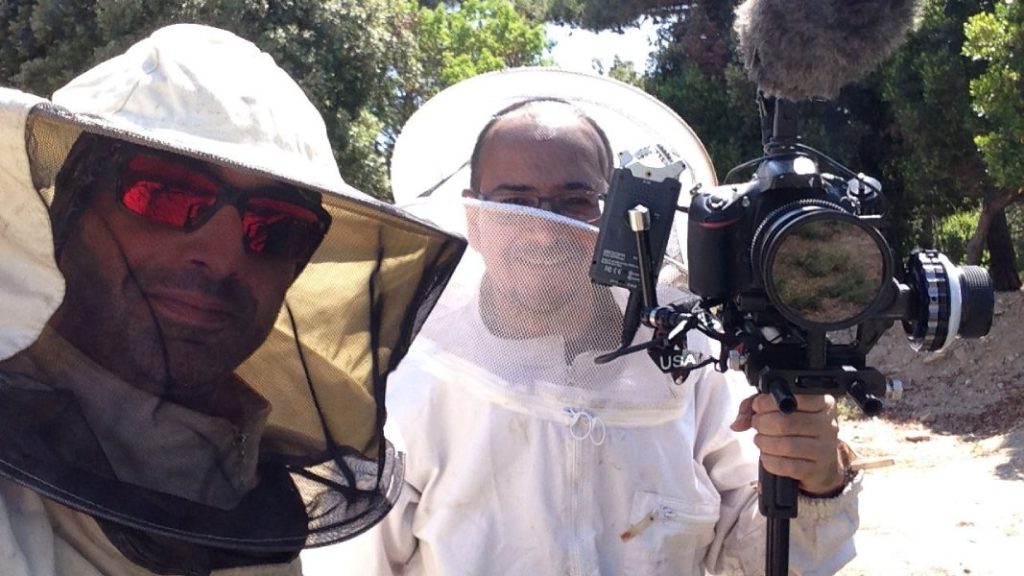
David and Constantinos filming in Ikaria
The year began where the last had left off, back in Ukraine, where despite the biting cold we managed outdoor filming and training, and then to the sunny Mediterranean, Tunisia, working on the Media Open Hub with the Thomson Foundation.
On the other side of the world, we began a new project with Elena and HWLL, travelling to Chile and Easter Island on a documentary about ancient migration, a subject as vast as the Pacific itself. We begin filming, first at the museum in Santiago and then in the south with the Mapuche, who gave us access to their lives and rituals. Soon after that we flew five hours to the west and spent a week filming not only the famous stone heads on Easter Island but also the traditions of the Rapa Nui. As documentarians, this is what makes our lives so special. Spending time with exceptional people in exceptional places.
And once again technology shaped the work. When Christina from Blunatic wrote a script that demanded we shoot on a mobile phone, we chose the relatively new iPhone 7 and produced X, the story of a film director's struggles. It went on to win Best Smartphone Film at a festival in India, proof that the story matters more than the size of the camera. Filming with a mobile phone had its challenges but the knowledge and experience we gained working with Thomson Foundation in Ukraine the last two years helped us overcome those.
And of course, we want to give something back. When Christina asked us to help promote responsible pet ownership for the Argos Dog Shelter, we obliged with a few pro-bono public service announcements.
The year ended with another first: a multi-camera Christmas flash mob for Jamie Oliver's restaurants. To keep the surprise, our crew used mobile phones, drawing on the lessons of X, alongside DSLRs, blending in among the diners and capturing the whole thing without ever revealing the setup.
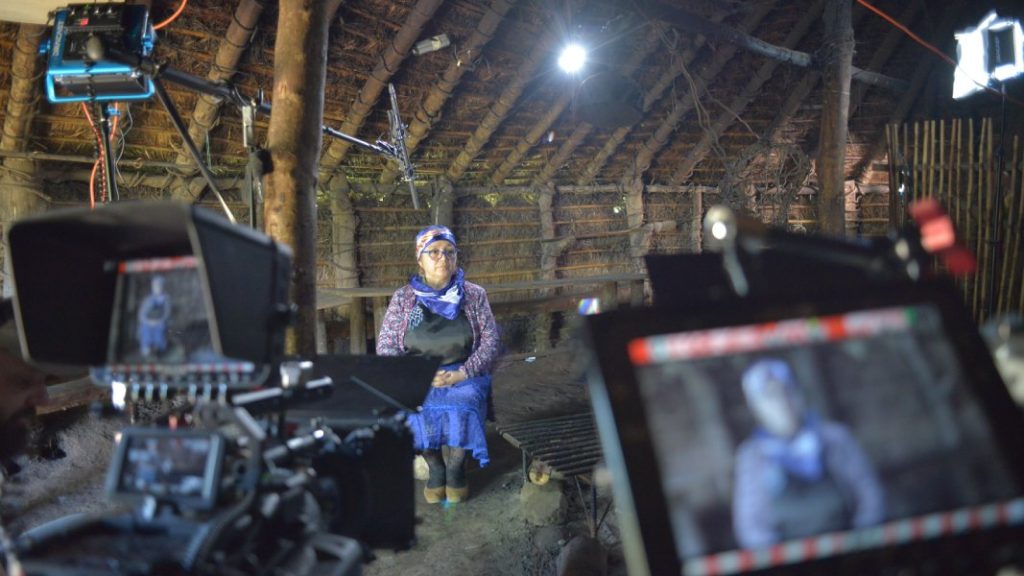
In Southern Chile
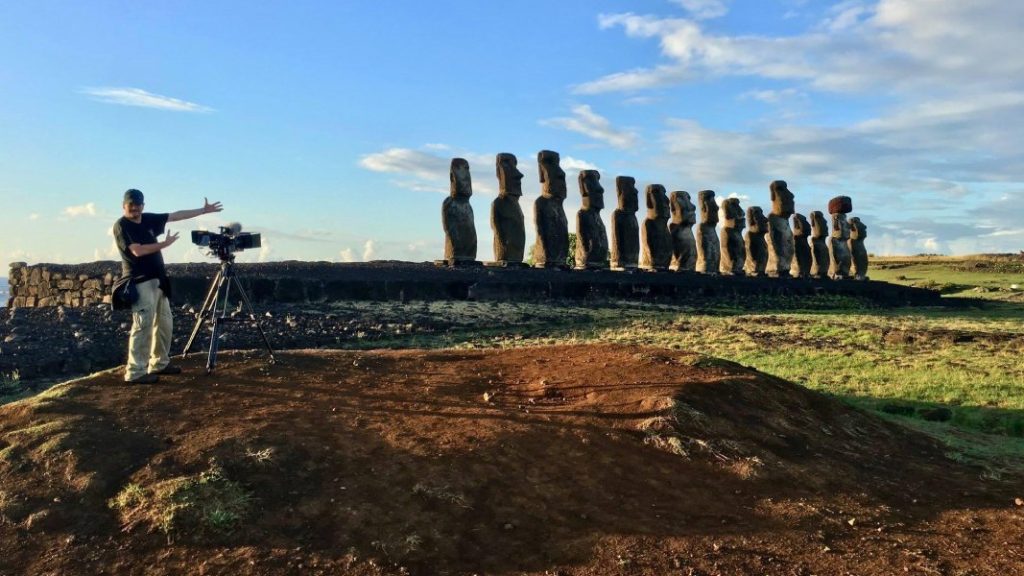
On Easter Island
In 2018 we provided social media training for UNHCR staff and continued our media training in Tunisia with the Thomson Foundation. But the project that meant the most was 7 Lives, 7 Stories, which put the camera into the hands of refugees themselves. Seven people were given training and mentoring to use video to tell their own stories, and there is little more powerful than watching someone find their own voice on screen. And this was the first of many projects we did with Melissa Hekkers who brought her own experience and knowledge she gained while volunteering on the island of Lesvos, which also resulted in a biographical book, Amir's Blue Elephant.
David acted as a consultant to the Cyprus Community Media Centre and travelled to the United Kingdom for Silence Hate, part of the Hate Speech Conference organised by IKME. We also returned to Chile to continue filming on Elena’s new film.
It was a strong year for international television too. We acted as local production partner in Cyprus for the BBC's Mediterranean with Simon Reeveand for series The Wall, narrated by Matthew Rhys. And we won a competitive bid to provide film and photographic services to UNFICYP, signing a three-year Long-Term Agreement, deepening a relationship that had begun years before.
The year's biggest news story came from the British bases, used to launch bombing missions over Syria. For four days we kept rotating crews camped outside the base, filming the military activity for ITN, a reminder that some of the world's largest stories still play out on our own small island
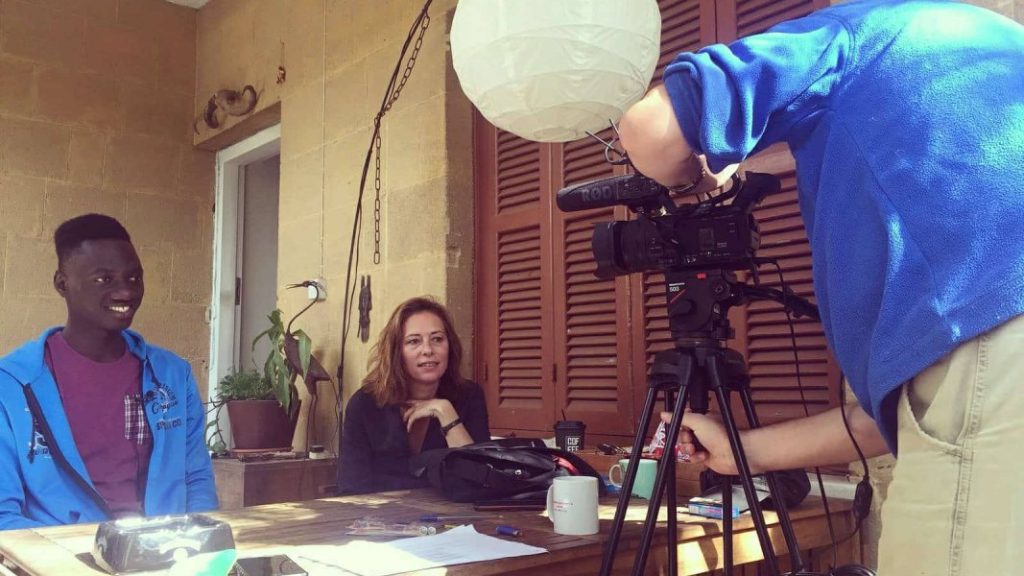
Melissa with Babucar, filming 7 Lives, 7 Stories
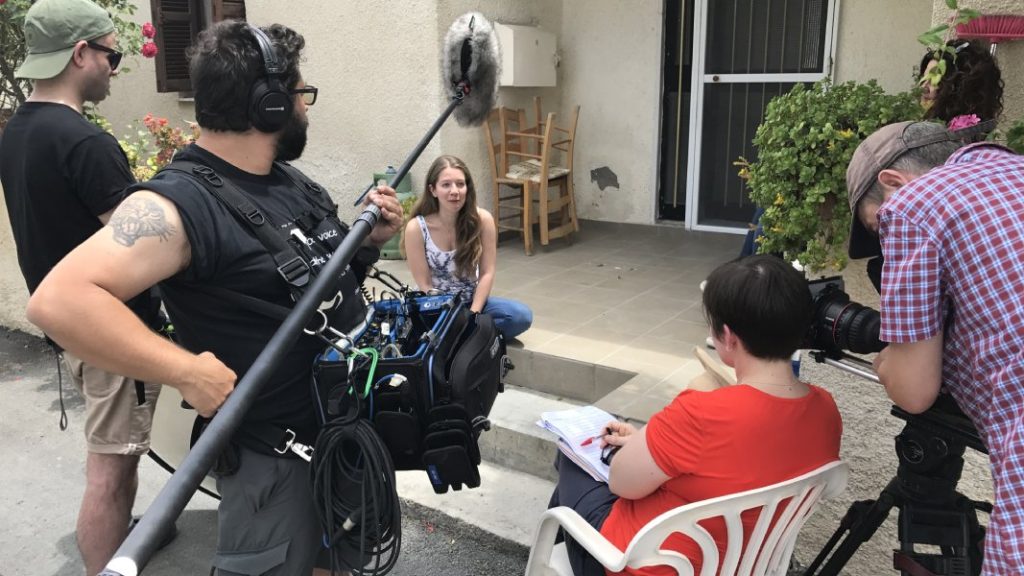
Filming The Wall, narrated by Matthew Rhys
Long before Crewhouse, back in our heavy war-coverage years, we had spent a great deal of time with the International Committee of the Red Cross (ICRC), who gave us logistical help in the world's worst places. So it was genuinely rewarding to work with them again, this time in Cyprus, during a conference on missing persons, a subject we have returned to over the years in news.
There was history to mark, too. UNFICYP became the first UN peacekeeping mission led by a woman, with women also heading both its military and police components. It was an important message to share, and the right moment to produce a new explainer film on the role of the UN in Cyprus. On a lighter note, we filmed ex-Chelsea’s footballer, Didier Drogba, as an ambassador for Peace and Sport, supporting a Friendly Football Day in Pyla that brought Greek Cypriot and Turkish Cypriot teams together.
We travelled to China for the Thomson Foundation to train journalists in mobile journalism. Two weeks that opened our eyes to a rich culture, but more importantly let us discuss the future of journalism in an increasingly challenging world. Our environmental work continued as well: we went out in the dead of night on police raids against the illegal songbird trapping on Cyprus's east coast, where armed and aggressive poachers use recorded birdsong to lure migratory birds into nets and lime-sticks. Filming for international broadcasters carried on throughout the year, with assignments for Deutsche Welle, NOS, Associated Press, Al Jazeera and others.
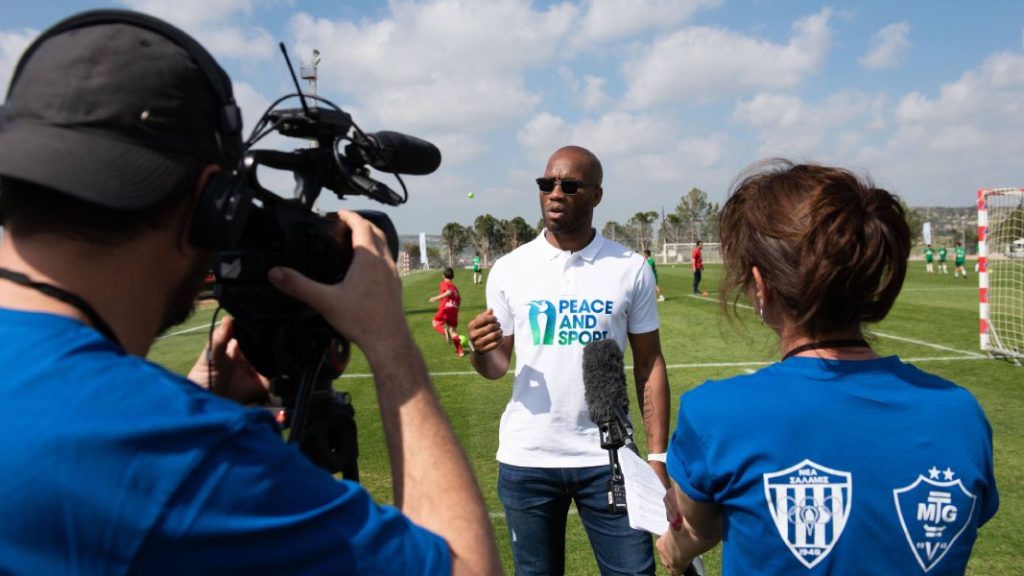
Didier Drogba, ambassador for Peace and Sport
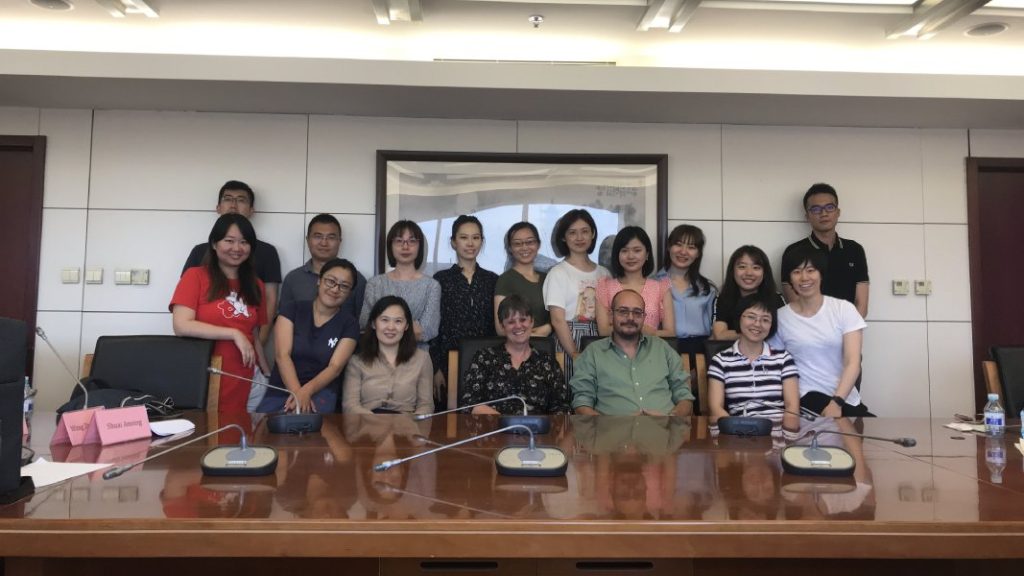
The team in China
That is a quote from the Netflix mockumentary, Death to 2020.
For us, it was definitely momentous. The BBC's flagship Top Gear came calling to film an episode in Cyprus. The job began with location scouting alongside producer Dave Morgan and Constantinos, searching the island for spots of interest and narrowing them to Larnaca and Paphos airports, the Achna racetrack, the Germasogeia dam and the Troodos ski slopes. Then came the permissions, no small task for a crew of over forty with stunts, a convoy of cars and, of course, the stars themselves. The team arrived at the end of February, and for four days we filmed non-stop, from the sunny coast of Larnaca to a race down the ski slopes of snowy Troodos.
And then lockdown. It did give us a chance to slow down a bit but yet the work did not stop. We produced green screen explanatory videos for Curious Qat, a new cultural organization, focusing on creativity and cultural intelligence.
We took broadcast assignments for ITN and Al Jazeera, including the Beirut port explosion story, and handled the cinematography and editing on Comédiens Italiens dans un Jardin, bringing paintings to life for the Leventis Museum as well as a short United Nations film on the Environment. One story was pure pandemic: with Britons stuck at home wanting company, and Cyprus home to some 200,000 strays, we filmed for the BBC's The One Showabout Cypriot dogs finding new homes in the UK.
As distancing rules rewrote our world, we moved into live multi-camera corporate production. Working with Nick’s newly established company, EventTechPro, we provided lighting, multi-camera setups, camera operation and live switching for remote and hybrid events, an entirely new field for us, and one born directly of the year that changed everything.
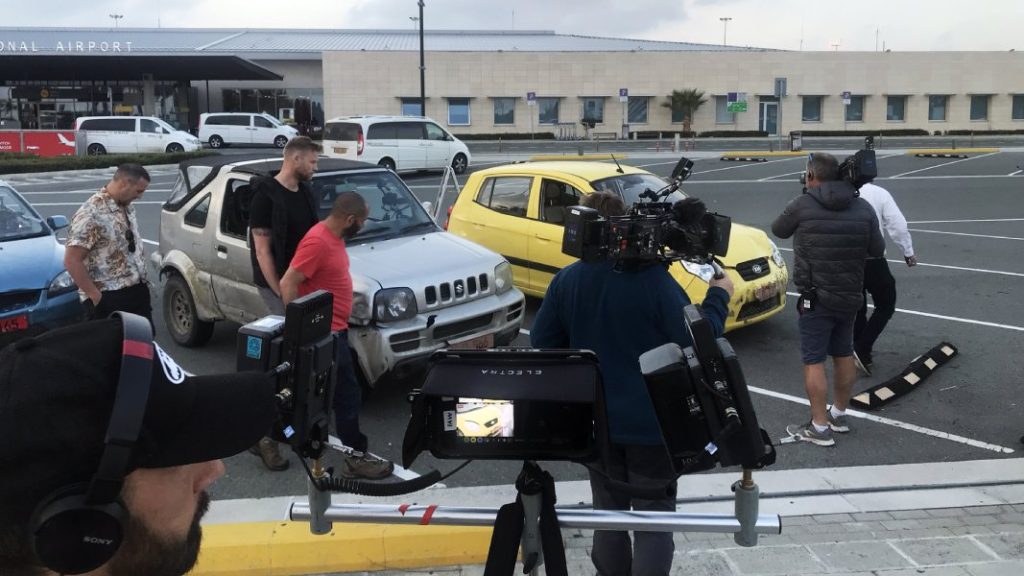
Top Gear
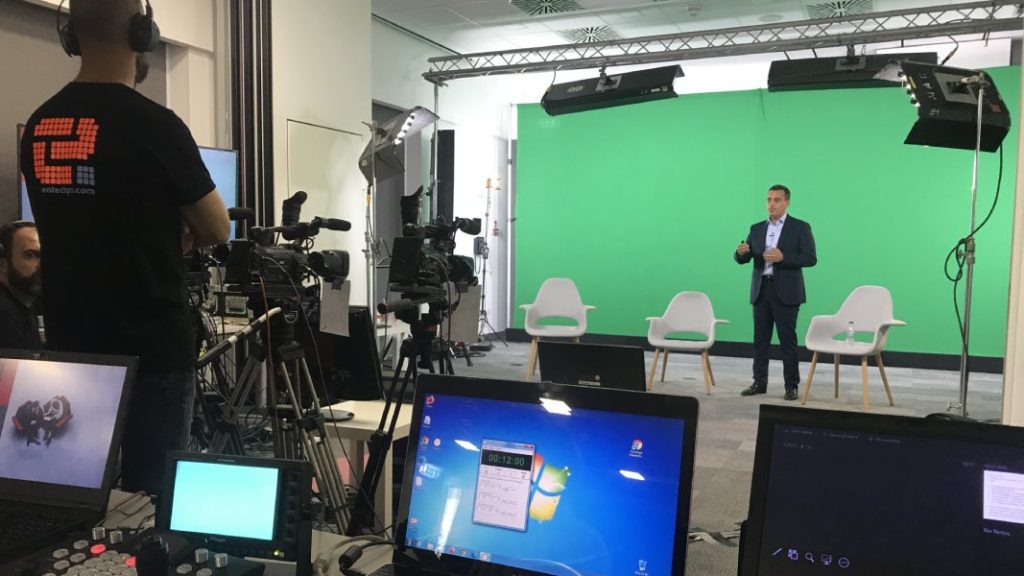
Multi-camera hybrid events
The Ikaria documentary we had made back in 2015 caught the eye of Prometheus Entertainment, producer of The UnXplainedwith William Shatner, and filming returned to the Greek island. David, who co-directed the original, was interviewed for the episode The Immortals, sharing his own thoughts on why he thinks the Ikarians live so long.
Another highlight was working with YouTuber Johnny Harris on Cyprus Uncharted, produced locally by Constantinos firm, Caretta Films. It was our first time working with a YouTuber, and we learned a great deal about this new format from someone with more than seven million viewers and who still delivers serious, thought-provoking work. We also acted as associate producer on The Stray Story, with Blunatic Pictures, a documentary that screened in twenty-five countries and won thirteen international awards with the aim to raise awareness on society's treatment of stray animals.
There was recognition of a different kind, too. When the Cyprus Technical Committee on Cultural Heritage was awarded the Europa Nostra Grand Prix, we were commissioned to produce the film presented during the ceremony in The Hague.
David served as Director of Photography on Repatriating the Soul of Cyprusfor Hellenic Parliament TV, on the return of stolen church frescoes and the work of Tasoula Hadjitofiand Walk of Truth, continuing a thread we had first picked up in 2014.
Broadcast work continued with the BBC's The One Show, including a feature on olive production, while our live multi-camera production expanded further into concerts and cultural events.
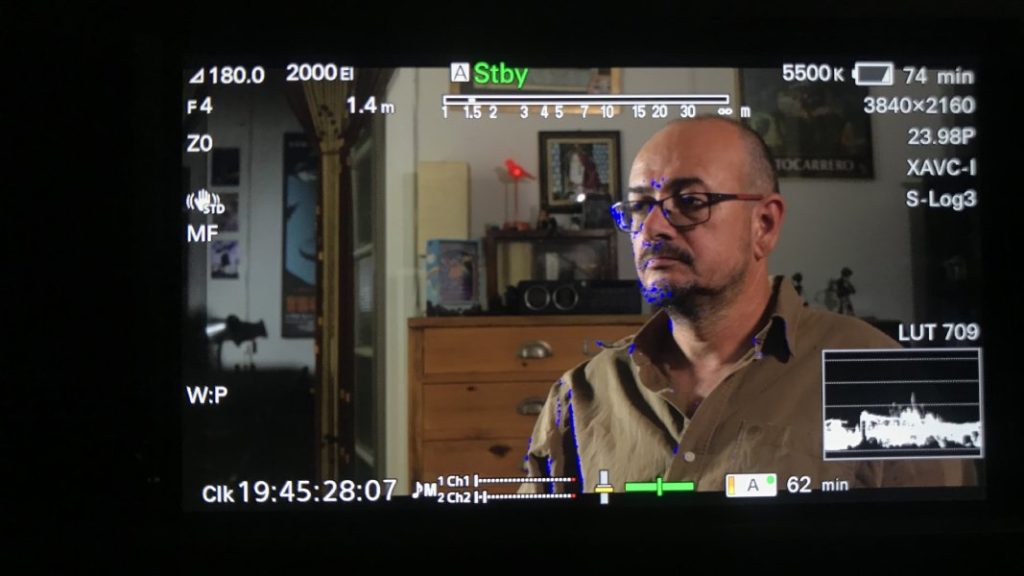
David filmed for the UnXplained
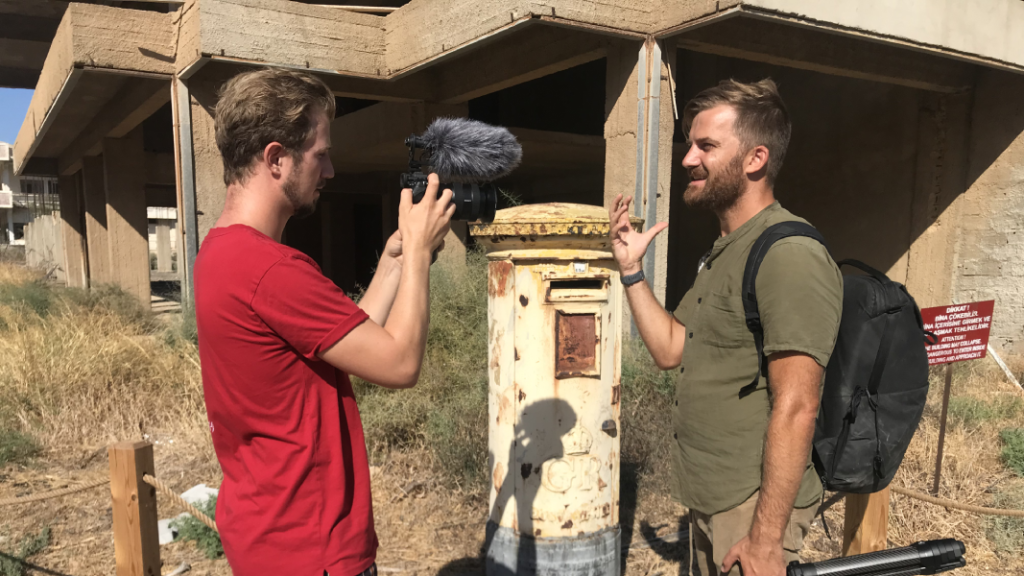
Johnny Harris on Cyprus Uncharted
The year's biggest news story was a painful one. David Hunter, a British expat living in Paphos, had suffocated his terminally ill wife Janice in what he told the court was a mercy killing at her own request. We covered the case throughout for ITN, one of those stories where the debate on human choices runs deep.
There was quieter work too. We provided production services for ARTE on an in-depth film about the environmental life of the buffer zone, that strange, accidental wilderness running through the island. As the UK marked Commonwealth Observance Day, we filmed the Cyprus segment for the BBC, featuring the Cypriot group Sistema, and we covered the impact of airline cancellations on tourism for BBC Panorama.
We also acted as local production partner in Cyprus and Greece for the Australian series Cheese: Searching for a Taste of Place.
We started a collaboration with the University of Cyprus, producing videos for the U-SOLVE programme, and we began a substantial project for AHDR, creating video teaching materials to accompany Our Multilingual World: A Teacher's Handbook. Designed for secondary teachers and educators, the resources help students explore their own and their peers' multilingual identities and cultivate a classroom culture of respect, curiosity and intercultural understanding, exactly the kind of quiet, lasting work we most value. And we did another first, a video art essay for Mirror of Conflict, made to accompany Nico Carpentier's photography exhibition on how the monuments of Cyprus carry competing versions of the same history.
This was also the year that we moved into the Sony Cinema line with acquiring the FX6 complete with new lenses coving the range from 16mm up to 600mm.
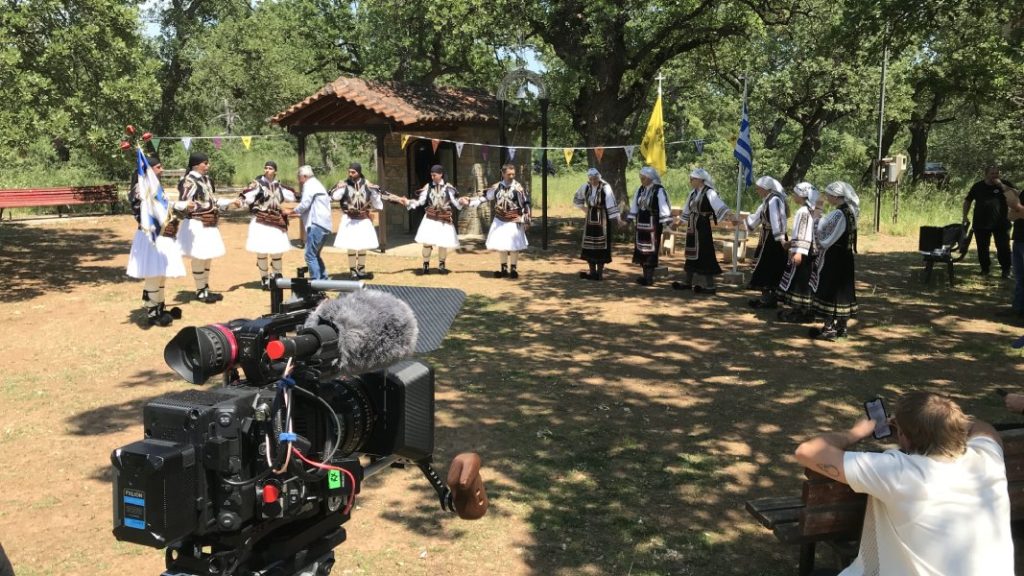
Cheese: Searching for a Taste of Place in Greece
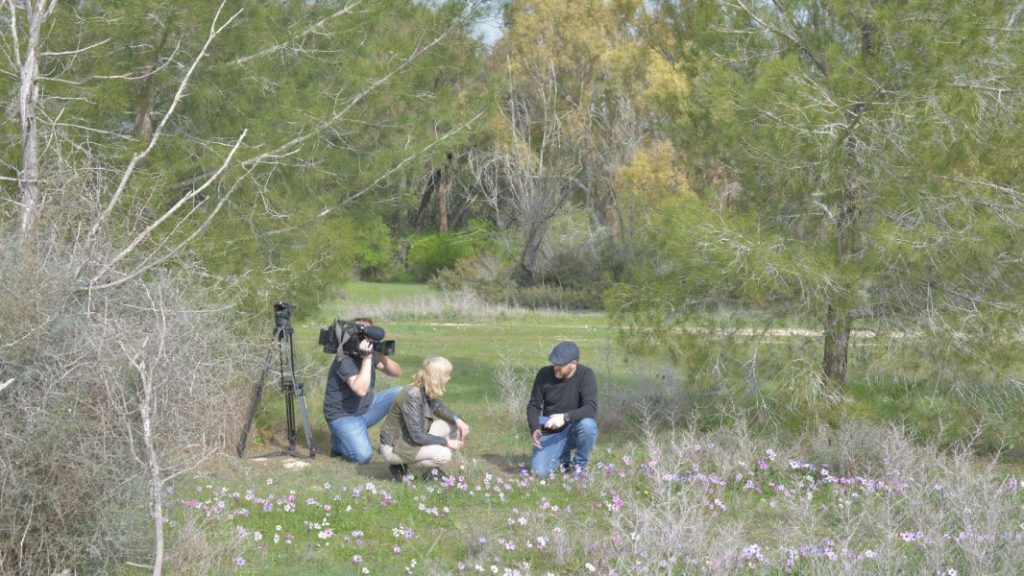
A film about the environmental life of the buffer zone with ARTE
In 2023 we produced and directed Cypriot Culinary Experiences, a documentary on the shared food traditions of the Greek Cypriot and Turkish Cypriot communities, another reminder that the table is often where reconciliation quietly begins.
David worked as Director of Photography on the Cyprus segments of two international documentaries, Les Résistant·e·s for TF1 about climate activism among younger generations and for the investigative documentary War of the Agents: Years of Terror for ZDF which explores how the Afghan intelligence service, financed by the CIA and supported by the German BND, tried to infiltrate and dismantle the Taliban.
We also filmed for the HUB-IN cultural innovation project in Nicosia and resumed project-based work with UNDP on cultural heritage as well as the beginning of a new relationship with the United World Colleges (UWC) And then there was the sheer joy of Big Zuu's 12 Dishes in 12 Hours for ITVX: to taste the food, film it, and then joke about it on camera is not the worst way to earn a living. And we entered into the scripted reality TV world, by provided production management in Cyprus for 90 Day Fiancé UK for CPL Productions. This year showed just how wide the spectrum of our work had become, from war investigations to reality television.
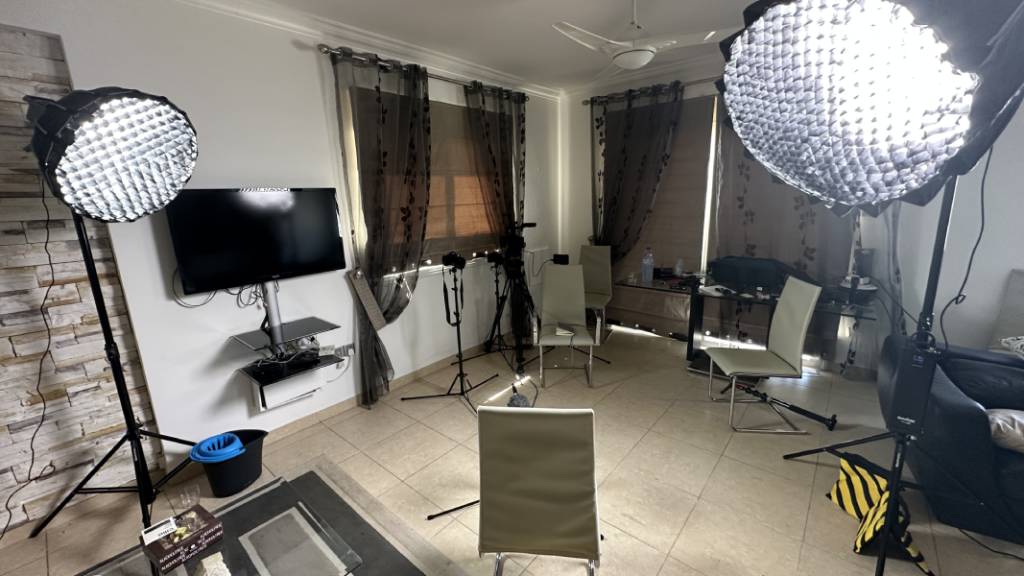
War of the Agents: Years of Terror for ZDF
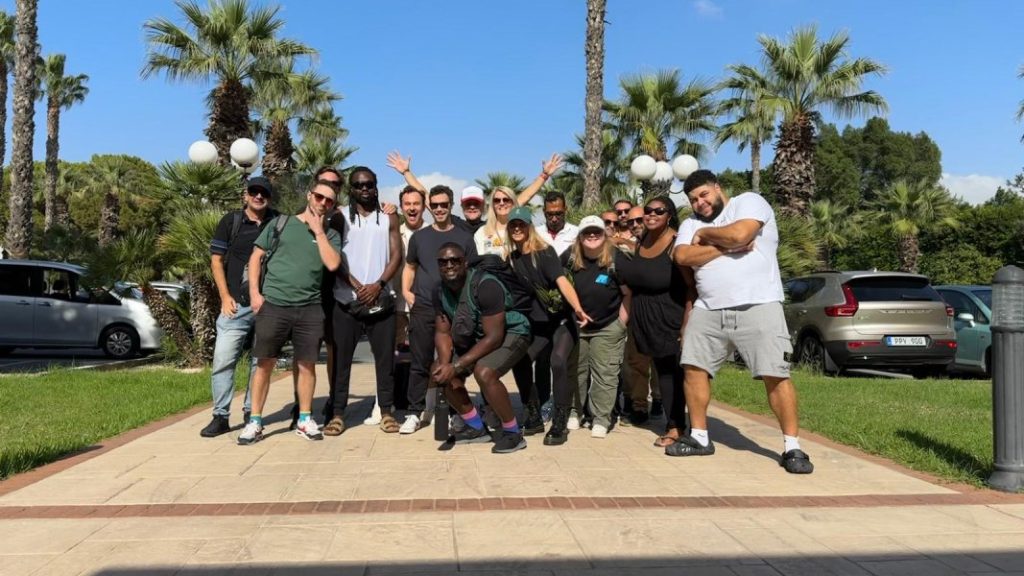
The team of Big Zuu's 12 Dishes in 12 Hours
2024 began with a project close to our hearts. In our film Out of Sight almost a decade ago, we explored a fictional world of the stories that four walls hold. But there is also a single room, the bi-communal room at the Ledra Palace Hotel, whose walls witnessed the turbulent modern history of Cyprus as it unfolded. In this room, meetings and events have long taken place to bring all Cypriots together, and together with the UN we felt the room deserved a story of its own. But it also began with sad news, as Hip-Hop our beloved cat, passed away of old age. He had been with us all his life, since he joined us in 2007. Take a look at the right-hand corner of our website and you may still spot him, looking down on us.
We also provided production management in Cyprus for Love Is Blind UKand continued our support for 90 Day Fiancé UK, returned to the Cheese: Searching for a Taste of Placeseries for additional filming, and produced films for the Cyprus Connectivity Voucher Scheme, promoting the digital upgrades funded by the EU Recovery and Resilience Facility. We also provided production services for Channel 5's Jewels of the Mediterranean, narrated by Joanna Lumley, a portrait of an island of sun, clear water and four million visitors a year, where young locals give traditional cuisine a modern twist and weavers break down old barriers.
Our biggest project of the year was In the Service of Peace for the United Nations. In 2024 UNFICYP marked sixty years since its establishment in 1964, and the film paid tribute to the personnel, from the armed forces and police to the civilian staff and the Cypriots themselves, who have worked for peace across six decades. We produced the short documentary Education as a Force for Peace for UWC and contributed to the DigiFolk project documenting European folktales. And we were back reporting on the very important issue of the missing persons providing production support for ITN. But as the year was coming to an end, on the 29th of November came the saddest news in our history: the passing of our co-founder Shane McDonald. The Australian who once, so the story goes, jumped without the bungee, who could be sent anywhere on earth and come back with the goods, was gone.
Crewhouse exists because three cameramen met in a Nicosia pub and chose to build something together rather than compete. One of those three had left us.
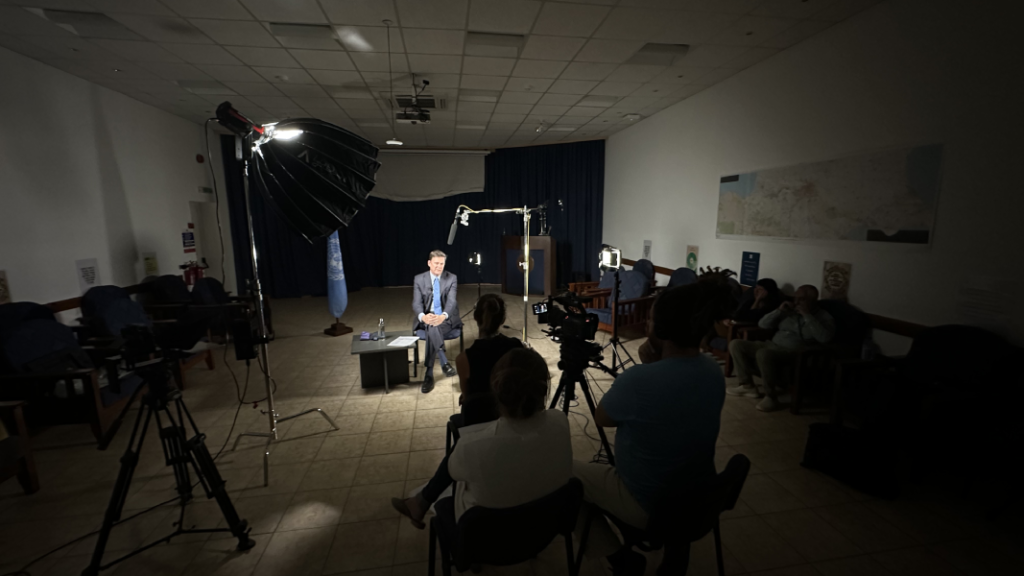
Filming for In the Service of Peace for the United Nations
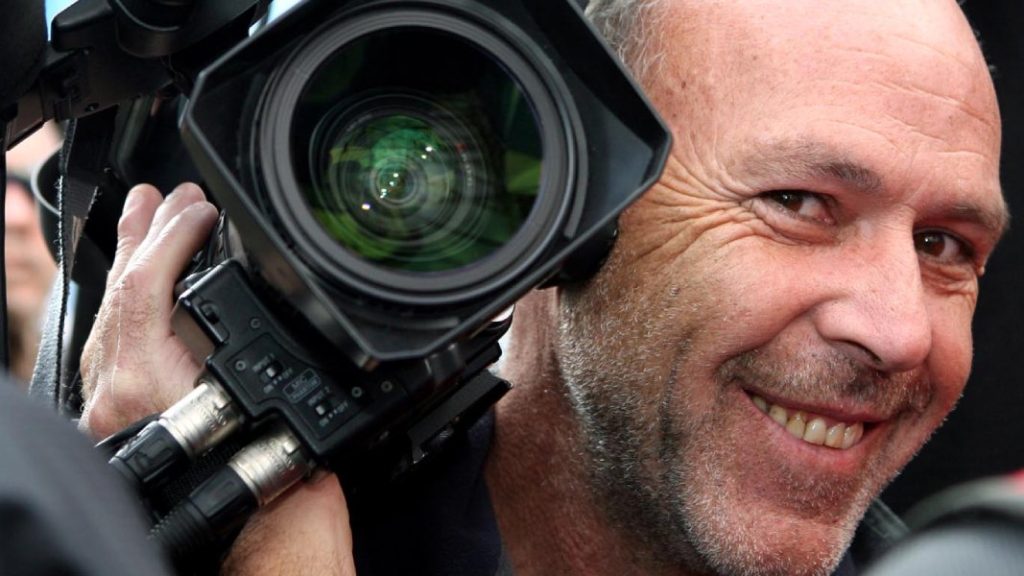
We say farewell to Shane
Greek Cypriot and Turkish Cypriot runners set out to complete the first coast-to-coast run across the island, and we told their story in Running for Peace. With crews and drone operators following them from their two separate starting points up to the moment they all met at the finish line, it showed, as sport so often does, how much easier it is to build trust while moving in the same direction. Another highlight was seeing our work exhibited at the Imperial War Museum in London, not the conflicts of our early years but filming and portrait photography of historic EOKA fighters, shown in Emergency Exits: The Fight for Independence in Malaya, Kenya and Cyprus. We secured a new Long-Term Agreement with UNDP Cyprus for video and photographic services, and David earned training certification from the Human Resource Development Authority of Cyprus (HRDA), while at the same time delivering a documentary-making workshop for students on the University of Cyprus MA in Peace, Conflict and Democracy.
We continued our long partnership with Blunatic Pictures, editing Christina’s award-wining short film LOUT, and teamed up with the Italian director Lorenzo Faggi on the feature documentary A Kingdom to Save, with Sasha as the DoP. There was plenty of filming for UNFICYP's Youth Champions and 16 Days campaign, and new reality TV production services for Norway's 16 Weeks of Hell, shot in Ayia Napa. And, true to a habit we picked up in year one, we pushed into new technology, producing our first professional 360 VR film. It prompted us to invest in the field and begin experimenting with AR, VR and mixed formats, and to expand into spatial audio, still learning, still chasing the next tool that might change how we tell a story.
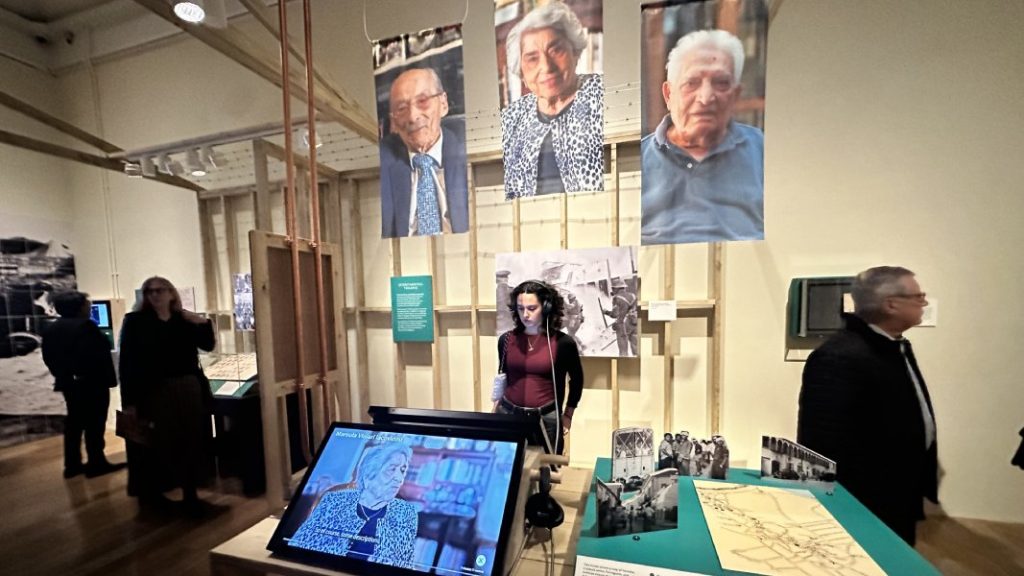
Our work exhibited at the Imperial War Museum in London
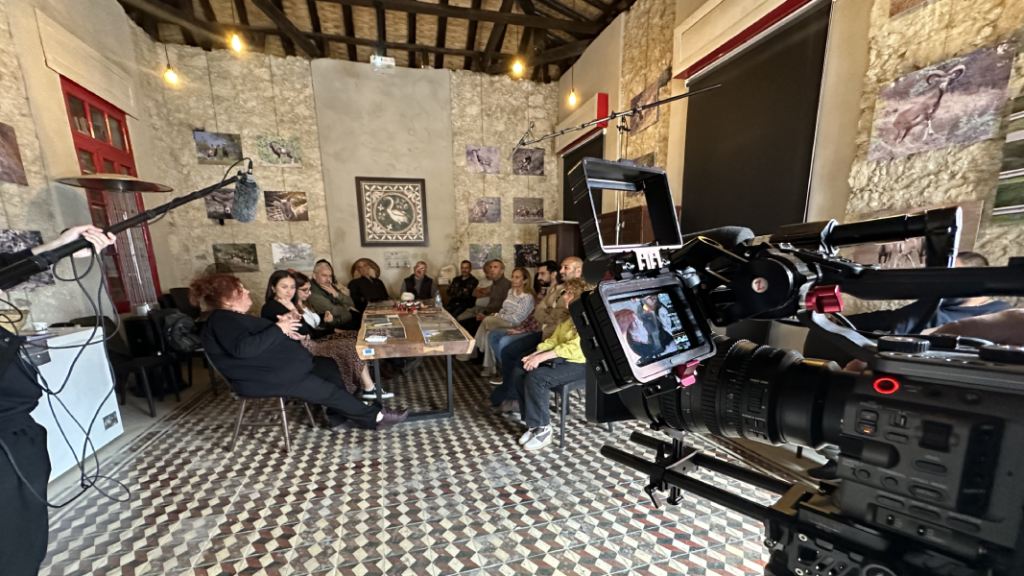
Filming A Kingdom to Save
The year started with providing field production for ARTE's Invitation au Voyageseries researching and arranging the filming of four 15-minute documentaries and, with our old friends at Blunatic Pictures, filmed and edited the music video for Christina’s song Paliatsos. We also provided news crews in Cyprus for ITN and Deutsche Welle, covering the impact on the island of regional developments involving Iran, proof that the wider world still arrives, unannounced, on our shores, just as it did in Beirut in 2006 while still continuing working for UNDP, expanding from cultural heritage to other domains. This year also marked twenty years since Crewhouse was registered as a limited company on 1st of August 2006.
Two decades on, we refreshed our website, the very place this history now lives, to look back on where we have been while continuing to build what comes next. And as life has it, in June we were accepted for funding by the Ministry of Culture on our first ever application, to produce the documentary The Unheard Muse, currently in research and development. The documentary about the contemporary music scene of Cyprus promises to be one of those subjects that is fun from the early stages of research.
Our last job of July, on the very eve of our anniversary, took us back to where it all began. We filmed UN Secretary-General António Guterres during his visit to Cyprus, and we filmed it the way we did in our earliest days: run-and-gun, fast and light, with Sasha and David on the cameras and Melissa producing. Twenty years on, chasing a story on the move with a small crew, it reminded us just how much fun we still have doing what we do. And so we close twenty years. We have looked back honestly at our history, at what we got right and the mistakes we made along the way, at the wars covered and the friendships formed, at a beautiful stone house overlooking the buffer zone that gave us both a home and a name. Three cameramen asked a simple question in a pub in 2004: compete, or join forces? The answer was obvious then, and looking at everything built since, it still is. The three did not all stay the course, Chris returned home to Australia, and we lost Shane, but what they built together outlasted the partnership itself, and that is the truest proof they were right. We move forward now, with new projects, new contacts and new collaborators, already looking to the next twenty years to come.
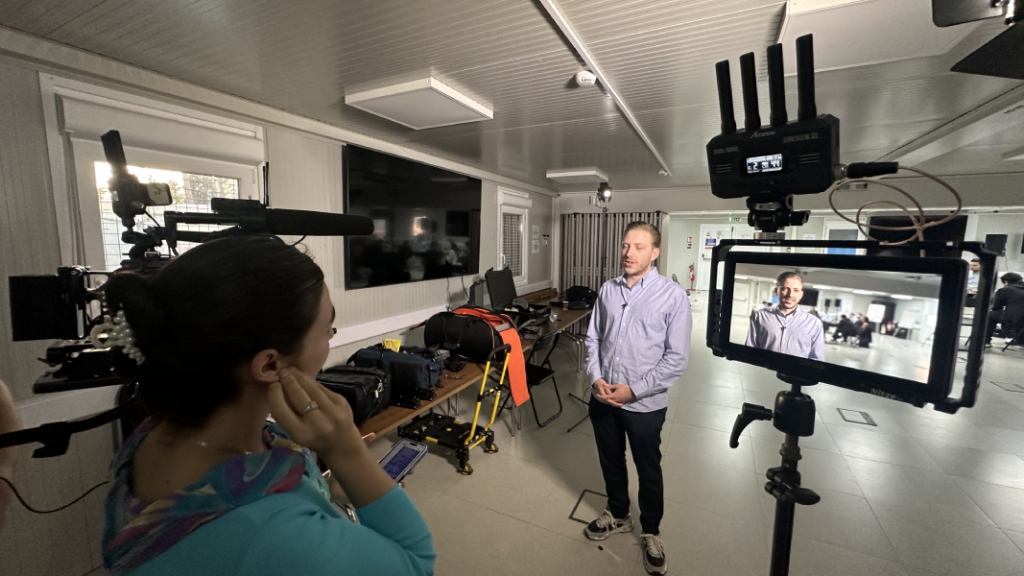
Filming for UNDP Technical committee on youth
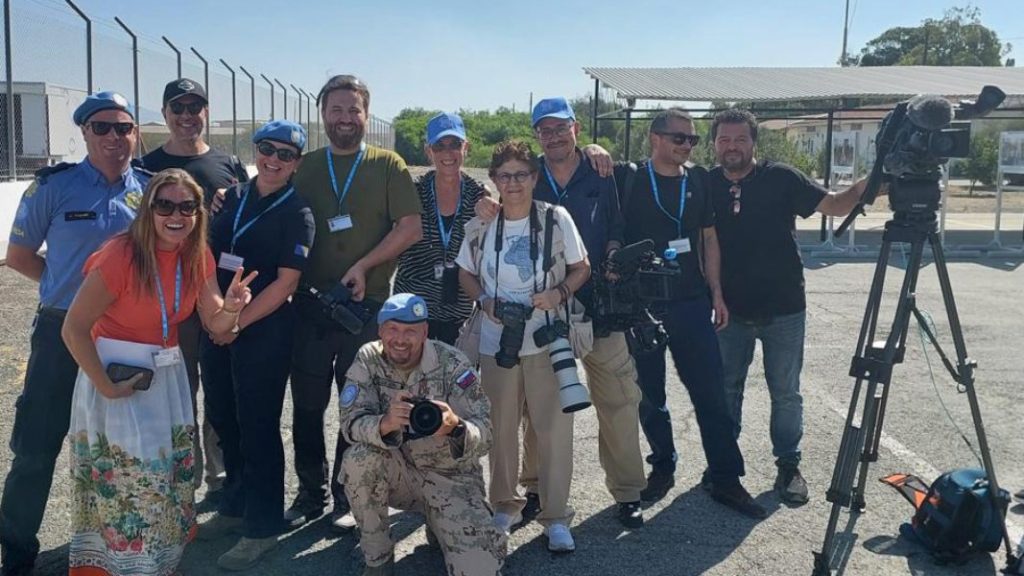
So much fun running around with our colleagues